Impeachment is a constitutional process used to remove high officials for serious wrongdoing. It is not the same as removal — it’s the formal charge. Here’s how it works in most presidential systems (U.S. and PH-style)
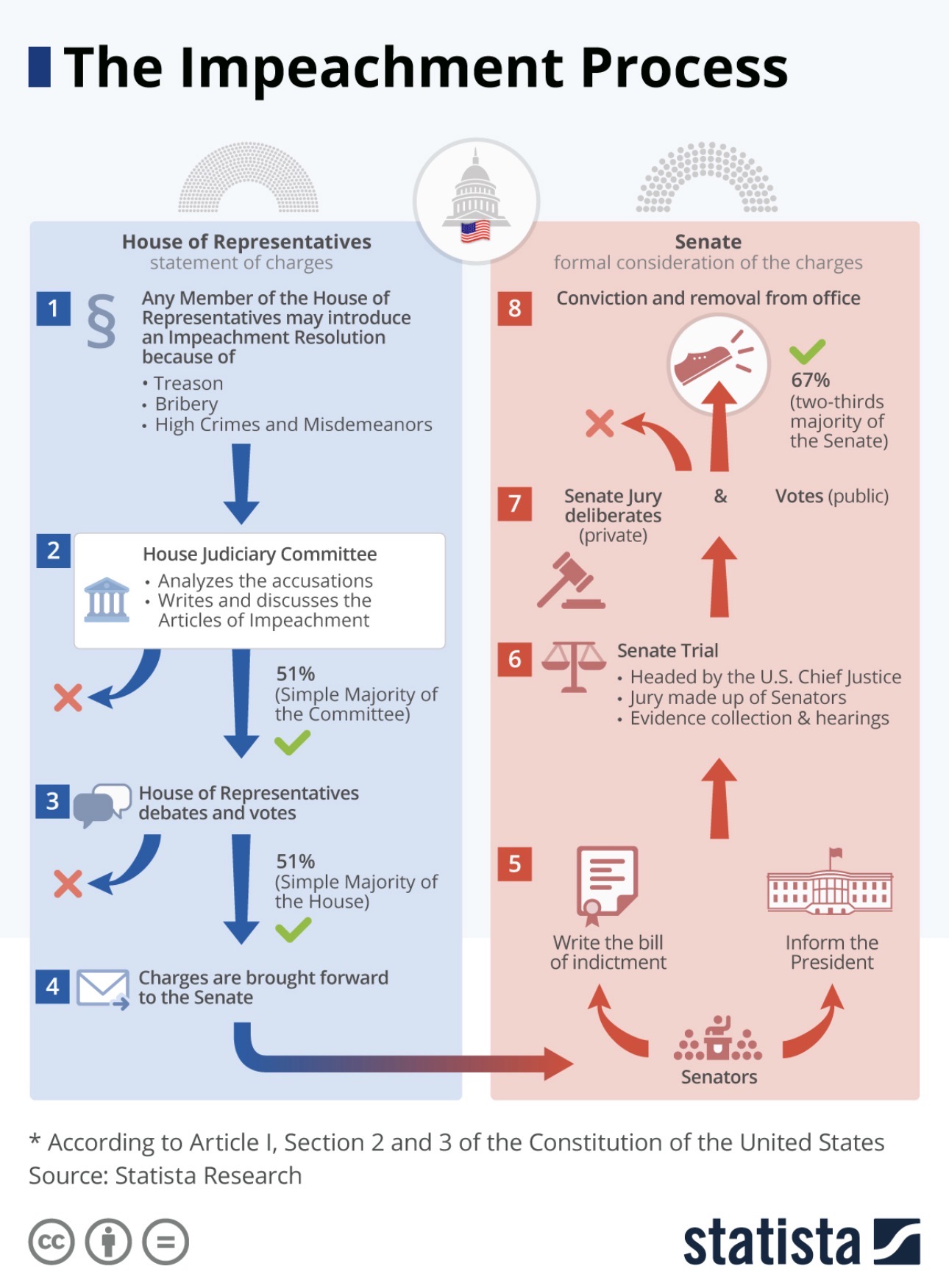
IMPEACHMENT PROCESS
1. File complaint
2. Committee review
3. House vote → impeachment
4. Senate trial
5. 2/3 vote → conviction
6. Removal + disqualification
1️⃣ Filing of Complaint
A complaint can be filed by:
• A citizen (endorsed by a lawmaker)
• A member of the House of Representatives
• Or by the legislature itself via resolution
The complaint must allege impeachable offenses such as:
• Betrayal of public trust
• Graft & corruption
• Bribery
• High crimes
• Treason
2️⃣ House Committee Review
The complaint is sent to the Justice / Rules Committee (PH or US context varies).
They check if:
• The complaint is sufficient in form
• Sufficient in substance
• Supported by evidence or documents
If it fails → Dismissed.
If it passes → Goes to hearings.
3️⃣ House Hearings & Voting
The committee holds:
• Hearings
• Witness questioning
• Evidence review
Afterwards, the full House votes.
To impeach, you need a simple majority.
If majority votes YES → The official is impeached.
If NO → Case dies.
4️⃣ Senate Impeachment Trial
Once impeached, the case moves to the Senate, which acts as a court.
They conduct:
• A full trial
• Witness testimony
• Evidence presentation
The Senate President (or Chief Justice if the President is on trial) presides.
5️⃣ Senate Verdict
Senators vote guilty or not guilty.
✔️ Guilty = Removal from office + possible disqualification
❌ Not guilty = Acquitted, remains in office
A 2/3 vote is required to convict.
6️⃣ Possible Aftermath
Even if acquitted:
• Additional investigations can continue
• Public opinion may still affect reputation
• Officials may face regular criminal cases after their term
IMPEACHMENT PROCESS ̶
1. Filing of Complaint
Citizens (endorsed by a lawmaker) or House members may file. Must allege
impeachable offenses like betrayal of public trust, corruption, bribery, high
crimes, or treason.
2. Committee Review
House Committee reviews if the complaint is sufficient in form and substance
before hearings start.
3. House Hearings & Voting
Committee evaluates evidence, conducts hearings. Simple majority vote in the
House is needed to impeach.
4. Senate Impeachment Trial
Senate conducts a full trial with witnesses, evidence, and arguments.
5. Senate Verdict
Conviction requires a 2/3 Senate vote. Guilty = removal from office. Not
guilty = acquitted.
6. Aftermath
Acquittal does not stop possible future investigations or cases after the
official's term.
HAVEFUNKEEPFIT
Coach Oel
No comments:
Post a Comment