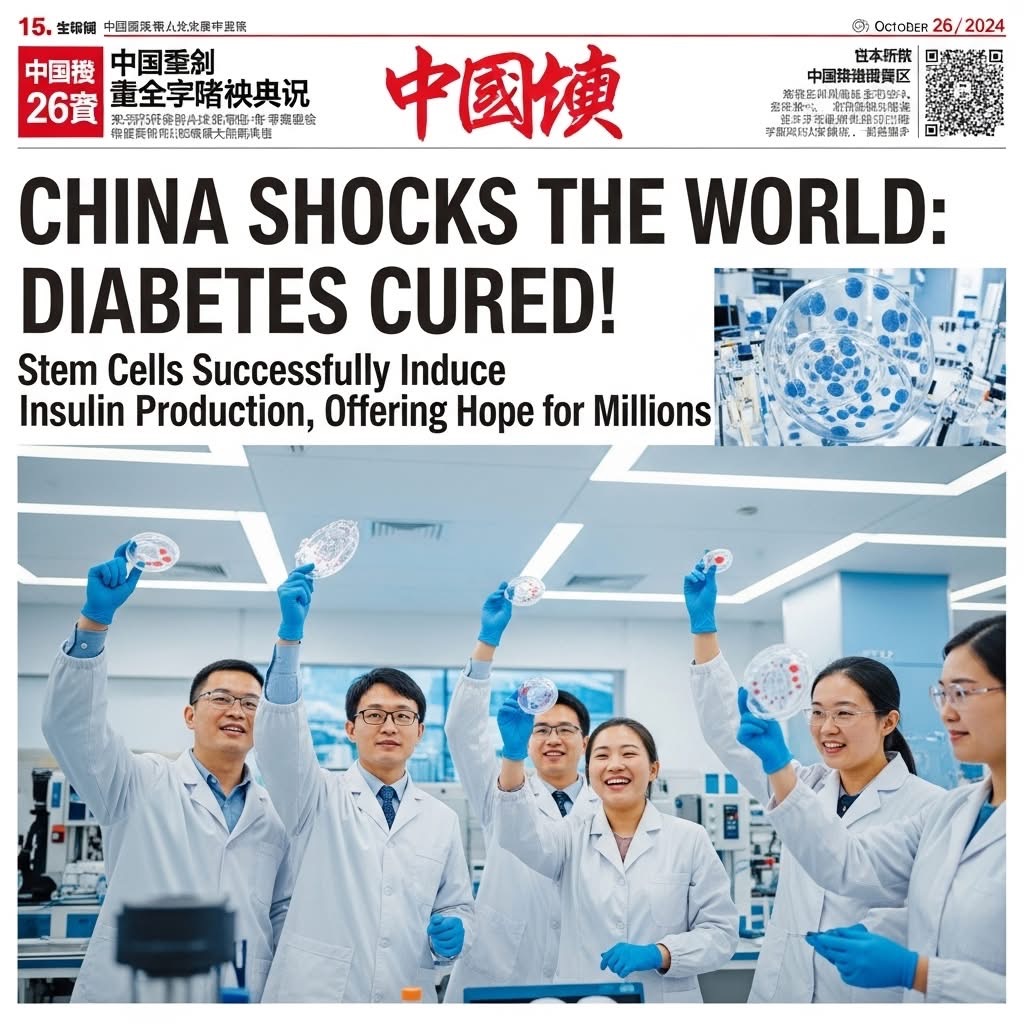
Scientists in China have reported promising results using stem-cell–based therapy aimed at restoring insulin production in patients with Type 1 Diabetes and Type 2 Diabetes. In early-stage clinical studies, researchers were able to generate functional insulin-producing pancreatic cells and transplant them into patients — with some participants reportedly reducing or eliminating their need for external insulin.
The therapy works by converting stem cells into pancreatic islet-like cells capable of sensing blood glucose levels and releasing insulin naturally. For Type 1 diabetes — an autoimmune condition where insulin-producing cells are destroyed — this approach aims to biologically replace lost cells. In certain Type 2 cases, restoring insulin production combined with improved metabolic regulation could significantly enhance glucose control.
However, experts stress that while results are highly encouraging, large-scale trials, long-term monitoring, and broader regulatory review are still required before calling it a universal “cure.” Stem-cell therapies must demonstrate durability, safety, and affordability at scale. Still, the possibility of restoring the body’s own insulin production marks one of the most exciting developments in diabetes research in decades.
No comments:
Post a Comment