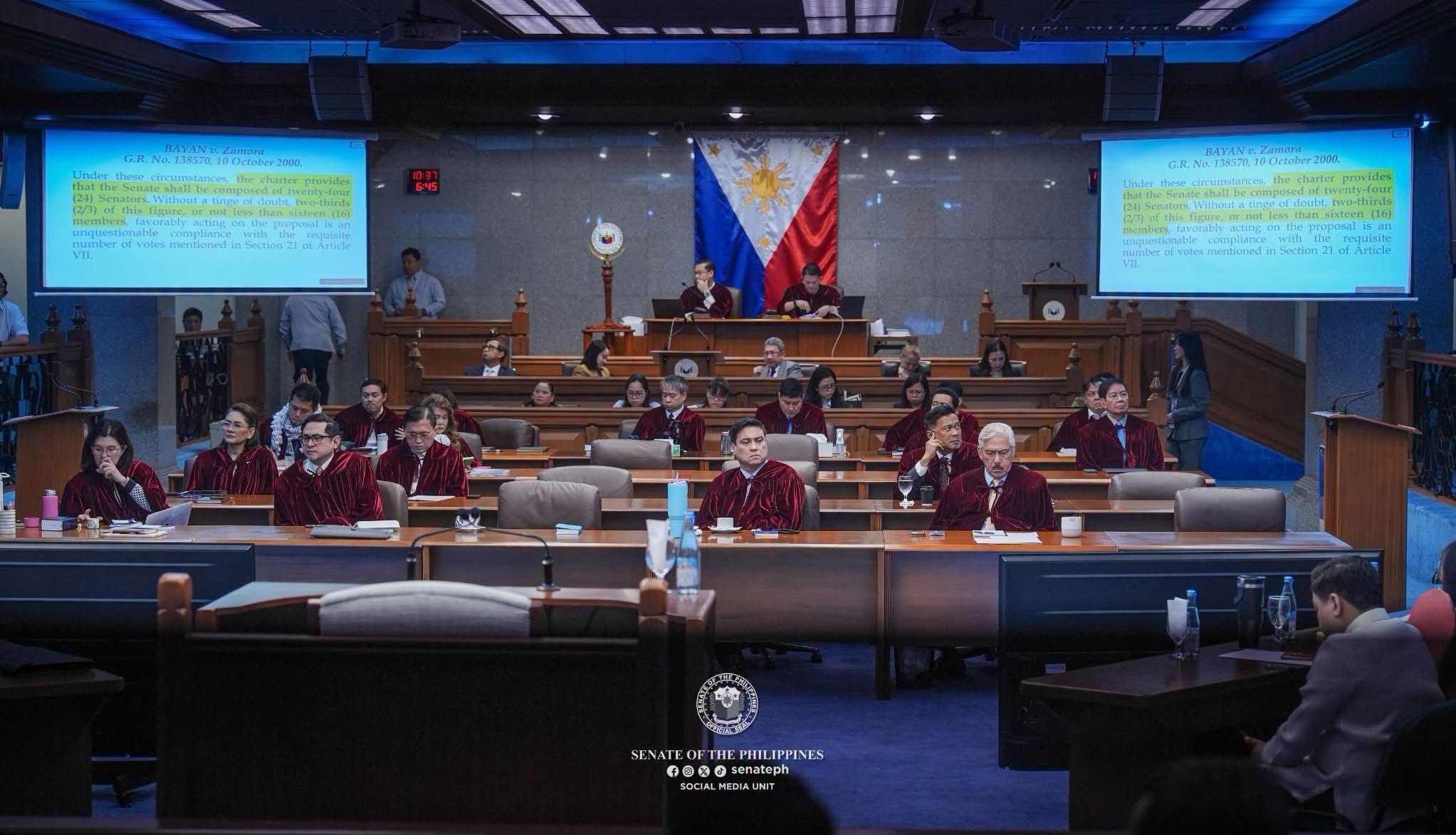
The impeachment proceedings against Vice President Sara Duterte have reached a point where, in my view, the biggest issue is no longer simply the strength of the prosecution or the arguments of the defense.
Something much bigger is now at stake:
How the Constitution itself is being interpreted in determining the outcome of an impeachment trial.
The controversy over the two-thirds voting requirement has dramatically changed the discussion. The constitutional requirement of a two-thirds vote remains, but the dispute now centers on who should be counted when determining that two-thirds threshold.
And that changes the playing field.
THIS IS BIGGER THAN THE PROSECUTION VS. THE DEFENSE
We can spend hours discussing the prosecution’s evidence.
We can analyze every argument presented by the defense.
We can debate which witnesses are credible and whether particular pieces of evidence are sufficient.
But there is now another question that Filipinos cannot ignore:
Will the final judgment be determined solely by the evidence and the Constitution—or will political realities ultimately shape the result?
That is the concern I have after watching these developments.
I am not saying that a conviction has already happened. No final judgment has been rendered.
But when something as important as the method for calculating the votes needed for conviction becomes disputed during the proceedings, people have every right to scrutinize what is happening.
WHY THE VOTING THRESHOLD MATTERS
The Constitution requires the concurrence of two-thirds of the Senate for conviction in an impeachment case.
The controversy is about how that two-thirds should be calculated when some senators cannot legally or factually participate.
One interpretation maintains that the Constitution refers to the entire membership of the Senate.
Another interpretation says the calculation should be based on senators who are legally and factually capable of participating in the final vote.
This isn’t a minor technical issue.
It could directly affect how many votes are ultimately required for conviction.
That is why Filipinos should pay close attention.
THE QUESTION OF POLITICS
Impeachment has always existed at the intersection of law and politics.
Senators sitting as impeachment judges are expected to examine evidence and constitutional arguments, but they are also elected political officials.
That reality makes transparency even more important.
When the rules governing something as consequential as the voting threshold are disputed, the public deserves clear explanations.
The Filipino people should be able to understand not only what the Senate decides, but why it believes its interpretation is consistent with the Constitution.
THE DEFENSE STILL HAS A JOB TO DO
Regardless of the political environment, the defense cannot simply walk away.
It must continue challenging evidence it considers weak or inadmissible.
It must continue presenting constitutional arguments.
It must preserve its objections.
And when appropriate, it can seek judicial remedies.
Likewise, the prosecution carries the responsibility of proving its allegations through evidence rather than political rhetoric.
The seriousness of impeachment demands nothing less from both sides.
THE SUPREME COURT MAY HAVE THE FINAL WORD
If fundamental constitutional questions remain unresolved, the dispute may ultimately reach the Supreme Court.
And perhaps that is where one of the most important questions will eventually have to be answered:
What exactly does “two-thirds of all the Members of the Senate” mean under the Constitution?
Whatever interpretation eventually prevails could have consequences far beyond Sara Duterte.
It could become an important precedent for future impeachment proceedings.
That is why this issue should never be viewed only through the personalities involved today.
Presidents change.
Vice presidents change.
Senators change.
Political alliances change.
But constitutional precedents can remain for generations.
WHAT HAPPENS NEXT?
Vice President Sara Duterte’s defense still has several possible avenues.
It can continue participating in the proceedings and challenge the prosecution’s case.
It can continue raising constitutional objections.
It can seek appropriate remedies before the courts.
And ultimately, the senator-judges will have to cast their votes and publicly own those decisions.
For ordinary Filipinos, our responsibility is different.
We should continue watching.
Continue questioning.
Continue checking the facts.
And most importantly, refuse to allow political loyalty—whether pro-administration or pro-opposition—to replace independent judgment.
THIS SHOULD NEVER BE ABOUT BLIND LOYALTY
This should not simply be:
Marcos versus Duterte.
It should not simply be:
Administration versus opposition.
And it should certainly not become a contest over which political camp can shout louder.
The real questions should be:
Was the Constitution followed?
Was due process respected?
Was credible evidence presented?
Were the rules applied fairly?
And when the final judgment comes, can those responsible explain their decisions to the Filipino people and defend them under the Constitution?
Those are questions worth asking regardless of whom we support.
AND WHEN POLITICS FAILS US, WE PRAY
As a Christian, I also believe there comes a point when we recognize that human institutions are imperfect.
Politicians are imperfect.
Judges are imperfect.
Governments are imperfect.
And so while we continue demanding accountability from our institutions, we can also pray for our country.
Not simply for God to make our political side win, but for truth to prevail.
For justice to prevail.
For wisdom to guide our leaders.
For wrongdoing—wherever it exists—to be exposed.
And for innocent people not to be condemned because of politics.
The story of Joshua reminds us of something powerful. When Joshua encountered the commander of the Lord’s army, he asked whether he was for Joshua or for his enemies.
The answer was:
“Neither.”
Perhaps that is something every Filipino—whatever our political beliefs—should remember.
Instead of asking whether God is on our side, perhaps we should ask:
Are we standing on the side of truth?
Our country needs more than political victory.
It needs justice.
It needs accountability.
It needs institutions worthy of the people’s trust.
And above everything else, it needs Filipinos willing to defend truth even when the truth does not favor their preferred political camp.
Pray for the Philippines.
Pray for wisdom.
Pray for justice.
Pray for truth.
And pray that whatever happens next will strengthen—not weaken—the Constitution and the institutions that future generations of Filipinos will inherit.
God bless the Philippines. 🇵🇭🙏
#SaraDuterte #VPImpeachment #ImpeachmentTrial #Philippines #PhilippinePolitics #Constitution #RuleOfLaw #Justice #Truth #PrayForThePhilippines
No comments:
Post a Comment