Showing posts with label Family. Show all posts

Tuesday, October 13, 2026

RODRIGO ROA DUTERTE: FROM DAVAO CITY TO THE PRESIDENCY — THE REMARKABLE JOURNEY OF THE PHILIPPINES’ 16TH PRESIDENT

RODRIGO ROA DUTERTE: FROM DAVAO TO THE WORLD — THE LIFE AND POLITICAL JOURNEY OF A FORMER PHILIPPINE PRESIDENT
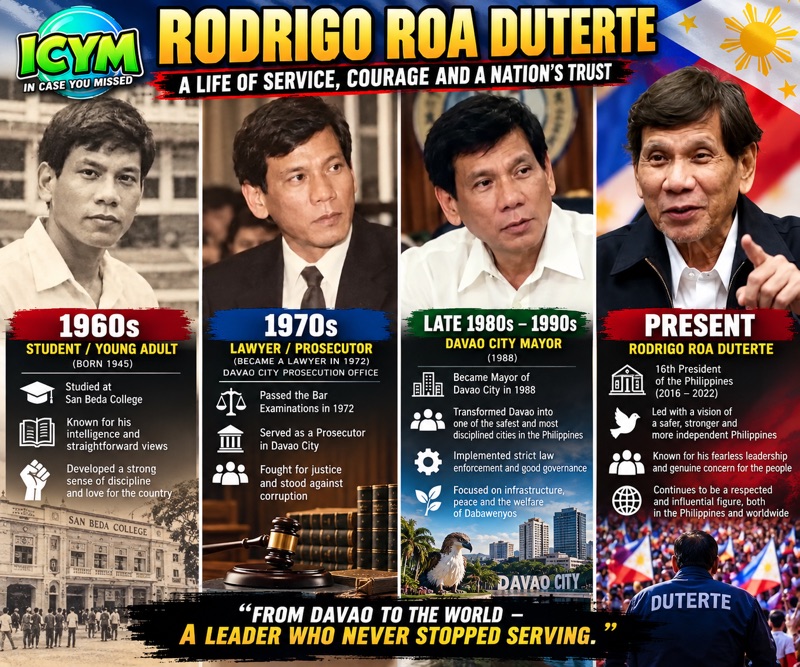
From a young student to a lawyer, prosecutor, city mayor, and eventually the 16th President of the Philippines, Rodrigo Roa Duterte’s journey remains one of the most discussed chapters in modern Philippine political history.

Rodrigo Roa Duterte, popularly known as Digong or FPRRD, rose from local public service in Davao City to the highest office in the Philippines. His political career was marked by strong public support, controversial policies, and intense national and international scrutiny.

Here is a look at the major stages of his life and career.

1960s: THE EARLY YEARS — A YOUNG MAN WITH AMBITION

Born on March 28, 1945, in Maasin, Southern Leyte, Rodrigo Duterte grew up in a family involved in public service and politics.

His father, Vicente Duterte, served as governor of Davao Province, while his mother, Soledad Roa Duterte, was a teacher and civic leader.

Duterte pursued his education at the Lyceum of the Philippines University before studying law at San Beda College.

These formative years preceded a career that would eventually place him at the center of Philippine politics.

1970s: FROM LAW STUDENT TO PUBLIC PROSECUTOR

In 1972, Duterte completed his law degree and passed the Philippine Bar Examination.

He later joined the prosecution service in Davao City, where he worked as a public prosecutor before entering electoral politics.

His legal career provided experience in criminal justice, law enforcement, and public administration.

These experiences would later influence his approach to governance.

1988–2016: THE DAVAO CITY YEARS — BUILDING A POLITICAL LEGACY

In 1988, Rodrigo Duterte became mayor of Davao City.

Over multiple terms, he established a political reputation centered on strict law enforcement, public order, and local government administration.

Supporters credit his leadership with helping transform Davao City into a major economic and urban center in Mindanao.

His administration also promoted infrastructure development, emergency response services, and local government initiatives.

However, his approach to fighting crime attracted criticism from human rights organizations, particularly over allegations of extrajudicial killings associated with the so-called Davao Death Squad.

Duterte denied ordering unlawful killings.

His years in Davao City became the foundation of his national political identity.

2016–2022: THE 16TH PRESIDENT OF THE PHILIPPINES

On June 30, 2016, Rodrigo Roa Duterte assumed office as the 16th President of the Republic of the Philippines.

His administration pursued several major policies and programs, including:

  • Build, Build, Build: A nationwide infrastructure development initiative.
  • Campaign against illegal drugs: A central policy that received support from many Filipinos but also generated serious human rights concerns.
  • Universal Health Care Act: Signed into law in 2019.
  • Bangsamoro Organic Law: Helped establish the Bangsamoro Autonomous Region in Muslim Mindanao.
  • Free Higher Education: Signed the Universal Access to Quality Tertiary Education Act in 2017.
  • Independent foreign policy: Pursued closer engagement with China and Russia while maintaining longstanding international relationships.

His presidency was also shaped by the COVID-19 pandemic, economic challenges, political disputes, and criticism over the government’s handling of human rights issues.

2022–PRESENT: A LEGACY STILL BEING DEBATED

After completing his six-year presidential term on June 30, 2022, Duterte remained an influential figure in Philippine politics.

His supporters continue to recognize him for his leadership style, infrastructure programs, and emphasis on peace and order.

His critics, meanwhile, point to the human cost of his anti-drug campaign, questions of accountability, and concerns about democratic institutions.

In March 2025, Duterte was arrested and transferred to the custody of the International Criminal Court in The Hague in connection with allegations of crimes against humanity arising from killings associated with the anti-drug campaign. These allegations remain subject to legal proceedings, and an accusation is not a conviction.

His political legacy continues to generate debate both within the Philippines and internationally.

FROM DAVAO TO THE WORLD: HOW WILL HISTORY REMEMBER RODRIGO DUTERTE?

Rodrigo Duterte’s journey from a provincial lawyer and prosecutor to Davao City mayor and Philippine president illustrates the remarkable political rise of one of the country’s most consequential contemporary leaders.

For supporters, he represents decisive leadership, political courage, and a willingness to challenge established systems.

For critics, his years in power raise fundamental questions about human rights, the rule of law, and accountability.

Whatever one’s political perspective, his influence on Philippine politics cannot be ignored.

History will ultimately judge his leadership through both his achievements and the controversies surrounding his administration.

WHAT DO YOU THINK?

How should future generations remember former President Rodrigo Roa Duterte?

Share your thoughts respectfully in the comments.


ICYM — IN CASE YOU MISSED

Bringing you stories, history, current events, and perspectives that matter.

#RodrigoDuterte #FPRRD #DigongDuterte #DavaoCity #PhilippineHistory #PhilippinePolitics #DuterteLegacy #ICYM #InCaseYouMissed #Philippines
Wednesday, October 07, 2026

ALAM MO BA? Ang “LUGAL” ay Isang Tunay na Sinaunang Sumerian Word


-Tagalog-

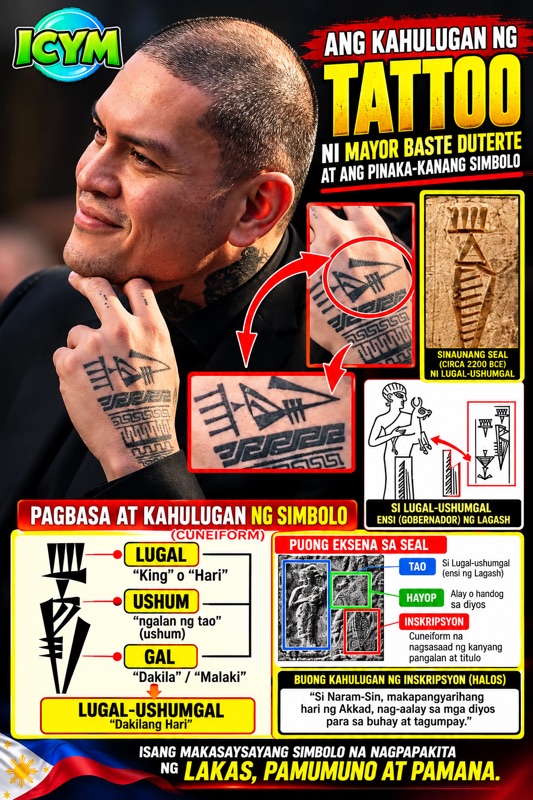
Kapag nakakakita tayo ng kakaibang simbolo o tattoo, natural lang na mapaisip kung mayroon ba itong mas malalim na kahulugan o pinagmulan. Isa sa mga simbolong pinag-uusapan ngayon ay ang 𒈗 — LUGAL, isang tunay na salita at cuneiform sign mula sa sinaunang Mesopotamia.

Ano ang ibig sabihin ng “LUGAL”?

Sa wikang Sumerian, ang LUGAL (𒈗) ay karaniwang nangangahulugang “king” o “hari.” Ginamit ito sa mga sinaunang inskripsiyon bilang titulo para sa mga pinuno.

Ang cuneiform ay isa sa pinakamatandang sistema ng pagsusulat sa kasaysayan. Sa halip na mga letrang katulad ng ginagamit natin ngayon, gumagamit ang mga sinaunang Mesopotamian ng mga hugis at marka na karaniwang inuukit sa clay tablets at seals.

Sino si Lugal-ushumgal?

Mas nagiging interesante ang kuwento dahil makikita rin ang salitang Lugal sa pangalang Lugal-ushumgal, isang sinaunang pinuno na nauugnay sa lungsod ng Lagash noong panahon ng Akkadian Empire, mahigit 4,000 taon na ang nakalipas.

May mga surviving seal impression na nagbabanggit kay Lugal-ushumgal. Sa mga inskripsiyon, inilalarawan siya bilang ensi, o gobernador ng Lagash, at bilang lingkod ni Naram-Sin, isa sa mga kilalang hari ng Akkadian Empire.

Paano naman ang tattoo?

Dito kailangang maging maingat sa interpretasyon. Kapag ang isang modernong tattoo ay mukhang kahawig ng sinaunang cuneiform o seal inscription, hindi nangangahulugang awtomatikong pareho ang kahulugan o pinagmulan nito.

Upang mapatunayan ang koneksyon, kailangang malaman ang eksaktong disenyo, pinagmulan at intensiyon ng taong nagpatattoo, at ikumpara ito sa mapagkakatiwalaang archaeological records.

Kaya mas ligtas sabihing may kapansin-pansing visual similarity kaysa sabihing napatunayang ang tattoo mismo ay nangangahulugang “Lugal” o direktang kumakatawan kay Lugal-ushumgal.

Isang Piraso ng Kasaysayan na Mahigit 4,000 Taon Na

Anuman ang pinagmulan ng modernong tattoo, ang LUGAL (𒈗) mismo ay bahagi ng tunay at napakayamang kasaysayan ng sinaunang Mesopotamia.

Mula sa mga clay tablet at cylinder seal hanggang sa mga pangalan at titulo ng sinaunang pinuno, ipinapakita ng cuneiform kung paano naitala ng mga tao libu-libong taon na ang nakalipas ang kanilang mga hari, pamahalaan, relihiyon at pang-araw-araw na buhay.

Kayo, ano sa tingin ninyo? Ang pagkakahawig ba ng tattoo at sinaunang simbolo ay coincidence lamang, o maaaring hango talaga ito sa ancient Mesopotamian imagery?

Disclaimer: Ang artikulong ito ay para sa historical discussion. Ang pagkakahawig ng mga simbolo ay hindi, sa sarili nito, patunay ng direktang koneksyon o kahulugan.

#Lugal #Sumerian #Cuneiform #Mesopotamia #AncientHistory #Lagash #HistoryFacts #AlamMoBa #ICYM


-English -

DID YOU KNOW? “LUGAL” Is a Real Ancient Sumerian Word

When we see an unusual symbol or tattoo, it’s natural to wonder whether it has a deeper meaning or historical origin. One symbol being discussed is 𒈗 — LUGAL, a genuine word and cuneiform sign from ancient Mesopotamia.

What Does “LUGAL” Mean?

In the Sumerian language, LUGAL (𒈗) commonly means “king.” It appeared in ancient inscriptions as a title associated with rulers.

Cuneiform is one of the oldest known writing systems in human history. Instead of letters like those we use today, ancient Mesopotamians used wedge-shaped signs that were typically impressed into clay tablets and seals.

Who Was Lugal-ushumgal?

The story becomes even more interesting because Lugal also appears in the name Lugal-ushumgal, an ancient ruler associated with the city of Lagash during the period of the Akkadian Empire, more than 4,000 years ago.

Surviving seal impressions mention Lugal-ushumgal. In inscriptions, he is identified as an ensi, or governor of Lagash, and as a servant of Naram-Sin, one of the best-known rulers of the Akkadian Empire.

What About the Tattoo?

This is where interpretation requires caution.

If a modern tattoo resembles ancient cuneiform writing or imagery found on ancient seals, that does not automatically mean it has the same meaning or historical origin.

To establish a genuine connection, we would need to know the exact design, its source, and the intention of the person who chose the tattoo, then compare it carefully with reliable archaeological records.

For that reason, it is more accurate to describe it as a possible visual resemblance rather than claim that the tattoo has been proven to mean “Lugal” or that it directly represents Lugal-ushumgal.

A Piece of History More Than 4,000 Years Old

Whatever the origin of the modern tattoo may be, LUGAL (𒈗) itself is genuinely part of the remarkable history of ancient Mesopotamia.

From clay tablets and cylinder seals to the names and titles of ancient rulers, cuneiform provides a fascinating glimpse into how people thousands of years ago recorded their kings, governments, beliefs, and everyday lives.

What do you think? Is the resemblance between the tattoo and these ancient symbols simply a coincidence, or could it have been inspired by ancient Mesopotamian imagery?

Disclaimer: This article is intended for historical discussion. A visual resemblance between symbols, by itself, does not prove a direct historical connection or shared meaning.

#Lugal #Sumerian #Cuneiform #Mesopotamia #AncientHistory #Lagash #HistoryFacts #DidYouKnow #ICYM


Sunday, September 13, 2026

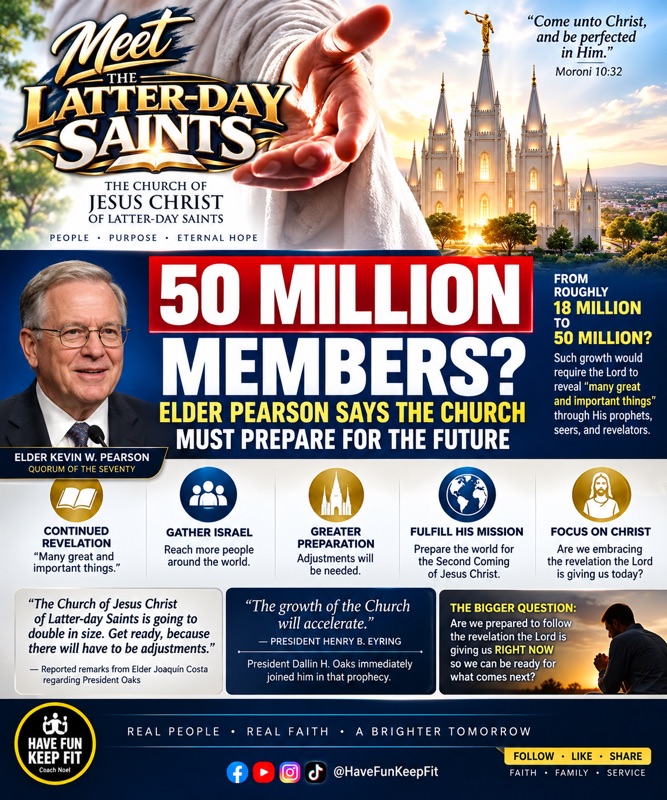
50 MILLION MEMBERS? ELDER PEARSON SAYS THE CHURCH MUST PREPARE FOR THE FUTURE

​

A recent message from Elder Kevin W. Pearson has sparked an important conversation about the future growth of The Church of Jesus Christ of Latter-day Saints.

Speaking about the possibility of the Church growing from roughly 18 million members to 50 million, Elder Pearson emphasized that growth on such a scale would require continued revelation—“many great and important things”—through prophets, seers, and revelators.

But the message goes far beyond numbers.

He connected the need for preparation with the Church’s divine mission and our responsibility to prepare for the Second Coming of Jesus Christ. 

His remarks also bring to mind other messages Church leaders have shared about future growth. President Henry B. Eyring has taught that the growth of the Church will accelerate, while other leaders have repeatedly emphasized the worldwide gathering of Israel and the need to prepare spiritually for what lies ahead.

There have also been reports from Church members in Chile suggesting that leaders were told to prepare for significant growth and the adjustments that could accompany it. Such secondhand reports should be distinguished from official statements, but they add to the wider discussion taking place among Latter-day Saints.

Still, perhaps the most important question isn’t:

“When will the Church reach 50 million members?”

The more important question is:

Are we prepared to follow the revelation the Lord is giving His Church TODAY?

Because our willingness to receive and act on present revelation may help prepare us for whatever the Lord reveals next.

With General Conference approaching, this is something worth pondering and praying about. 

Could we one day see 50 million members of The Church of Jesus Christ of Latter-day Saints?

If extraordinary growth is ahead, what changes and opportunities might come with it?

And most importantly, how are we personally preparing for the return of Jesus Christ?

Share your thoughts respectfully below. 👇

#GeneralConference #JesusChrist #SecondComing #LatterDaySaints #ChurchGrowth #LivingProphets #GatheringOfIsrael #Restoration #ComeUntoChrist #Faith


Wednesday, September 09, 2026

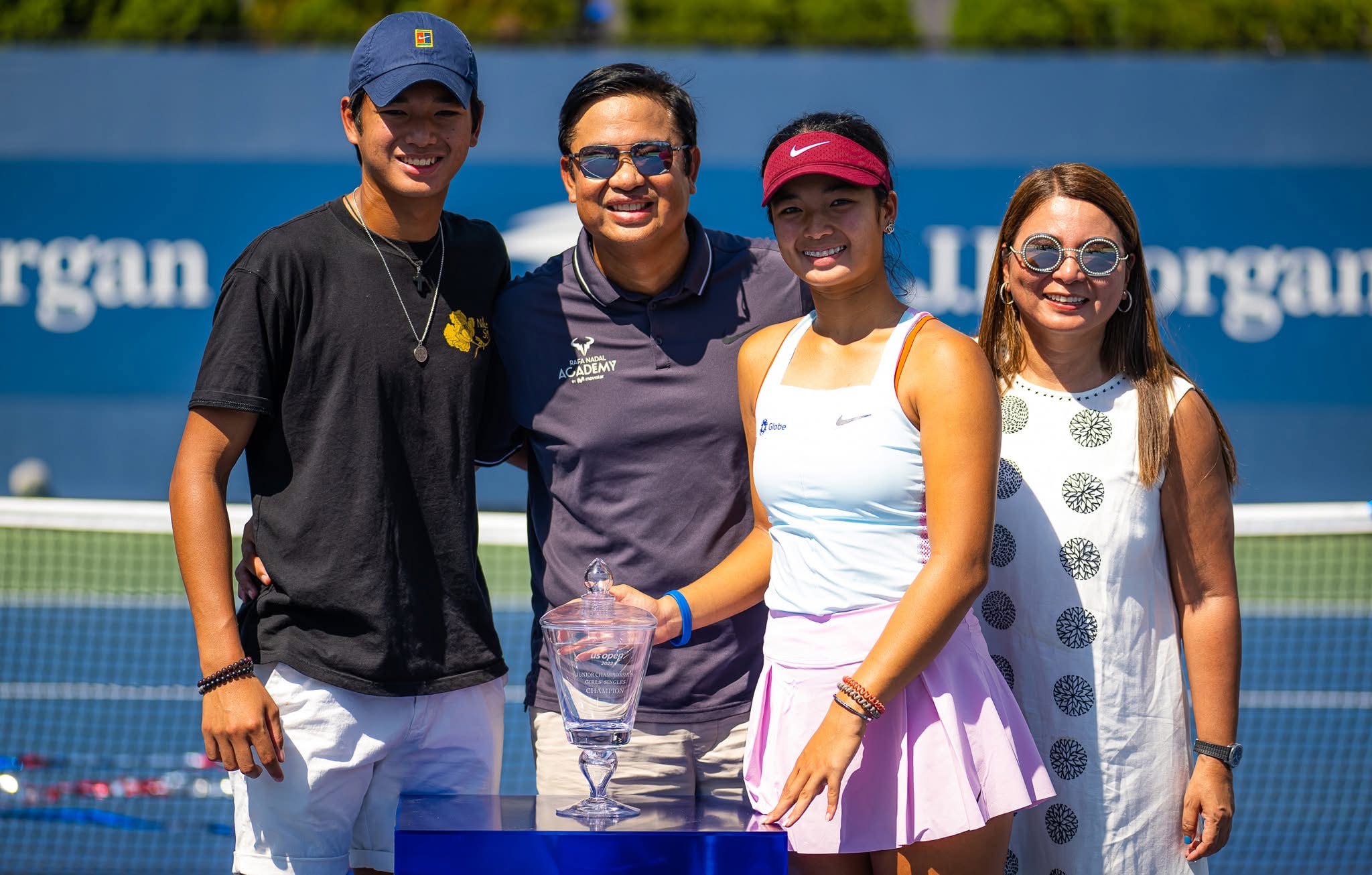
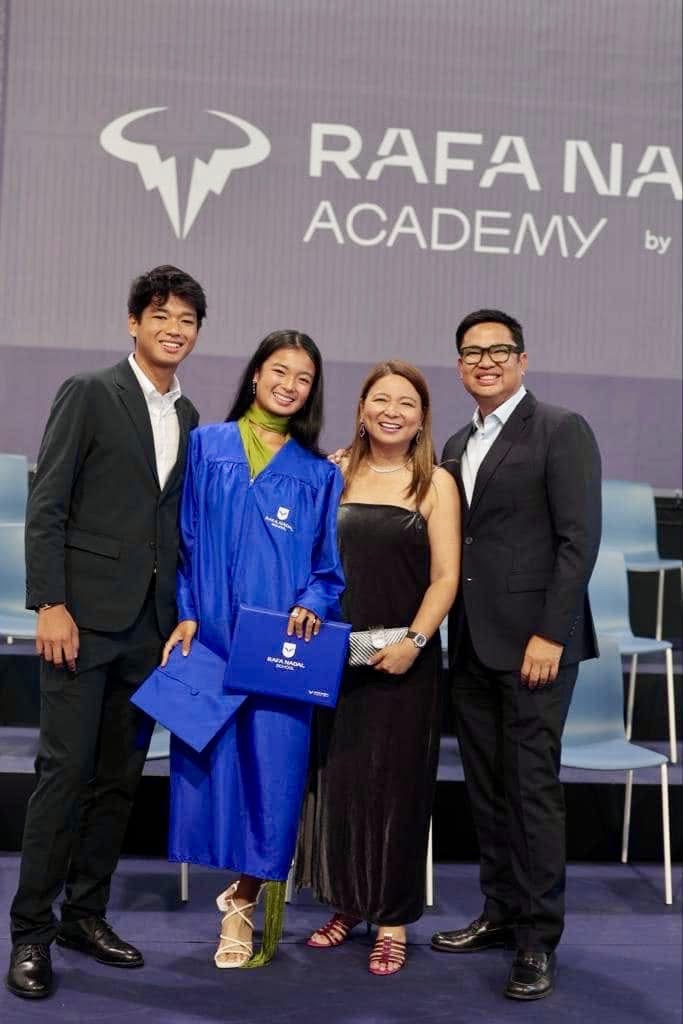
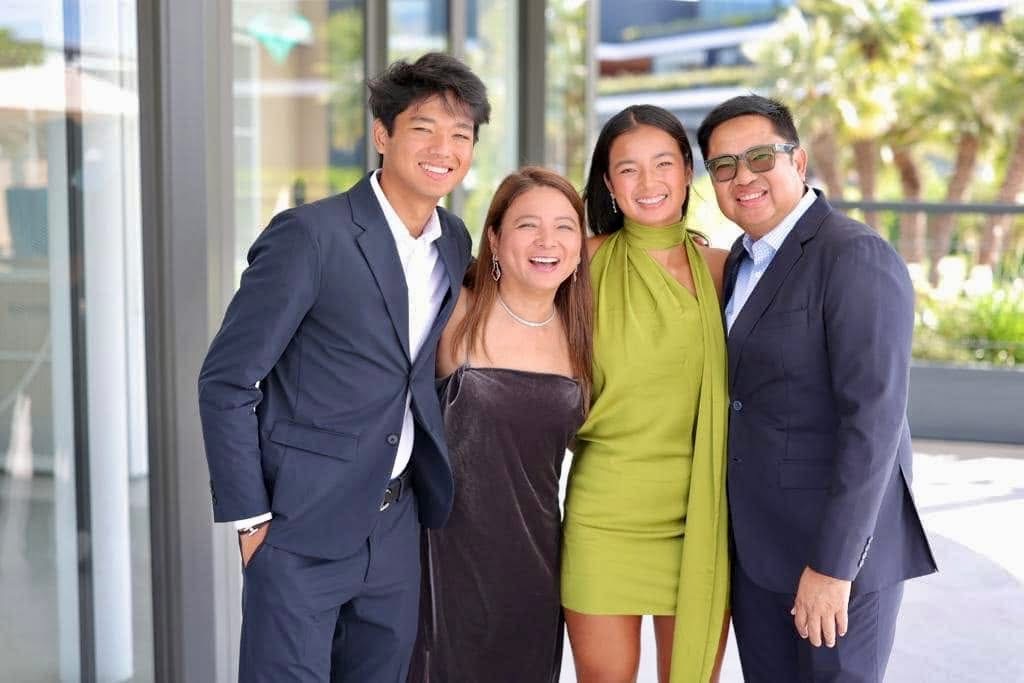
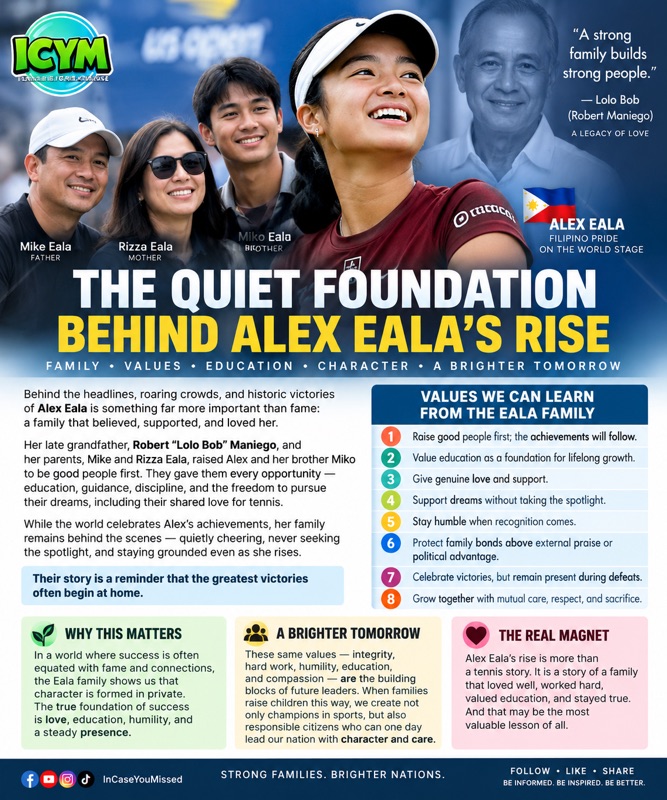
THE QUIET FOUNDATION BEHIND ALEX EALA’S RISE


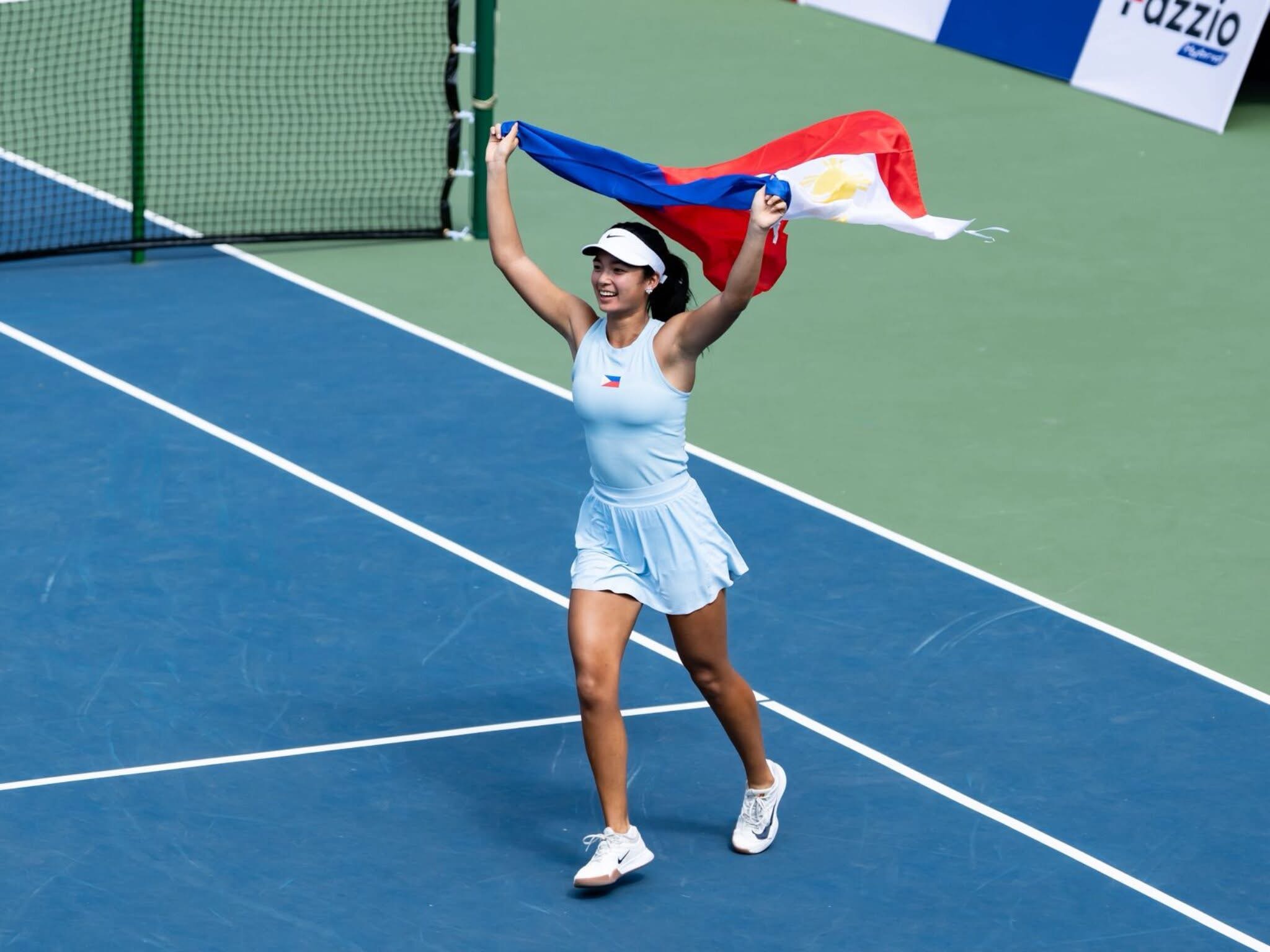
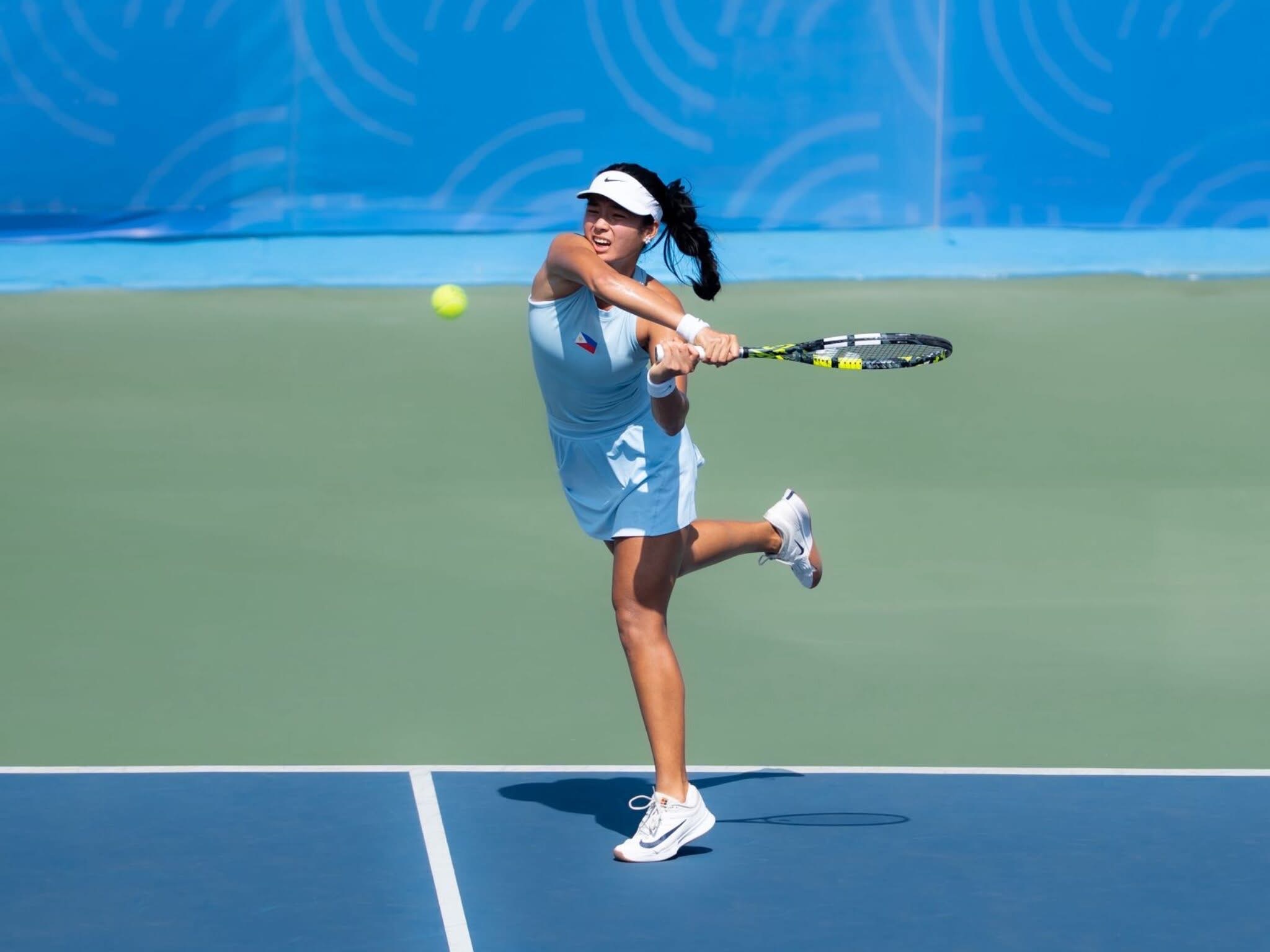
Behind the headlines, roaring crowds, historic victories, and growing international recognition of Alex Eala is something far more important than fame: family.

Long before the trophies and bright lights, there was a strong foundation built at home.

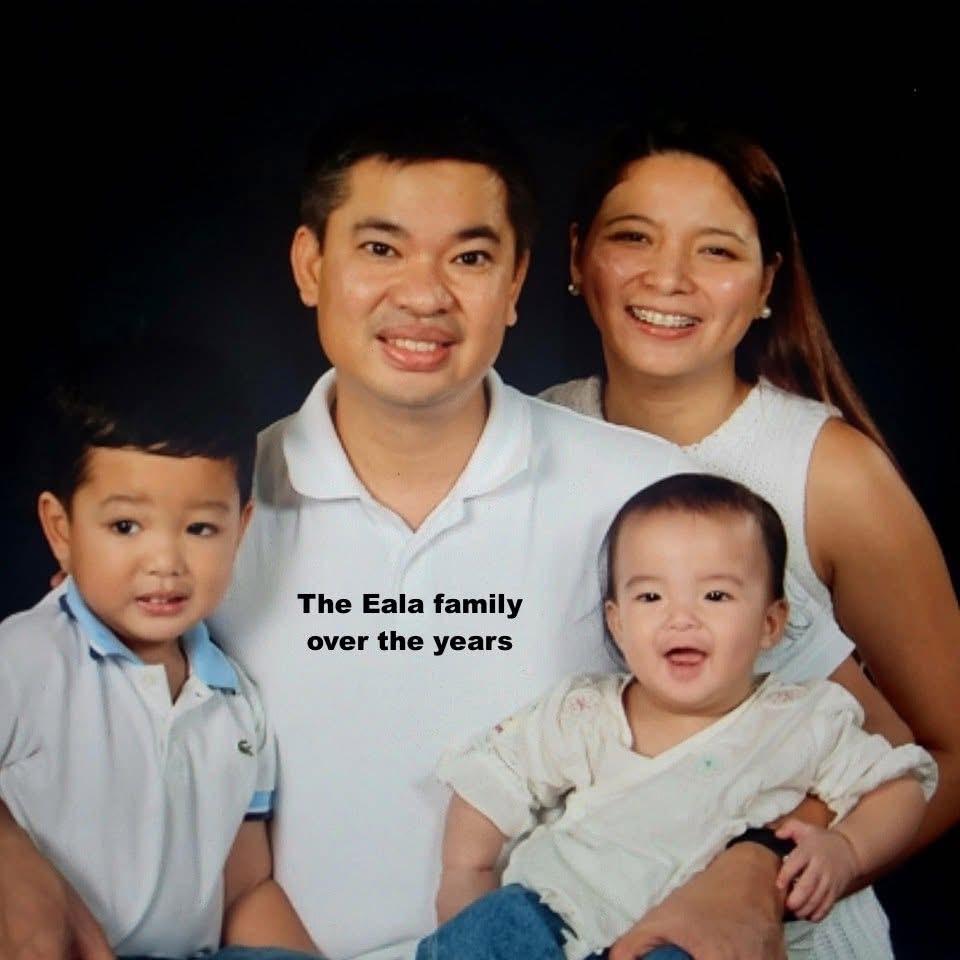
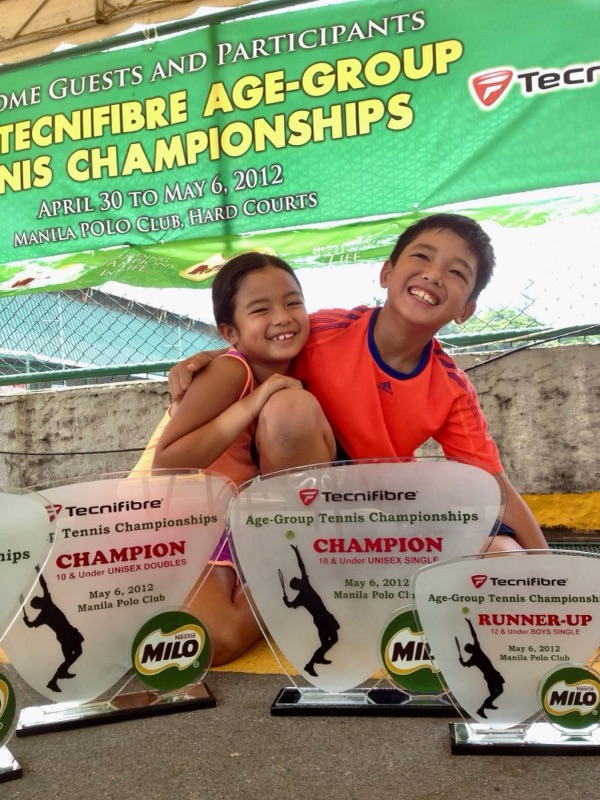
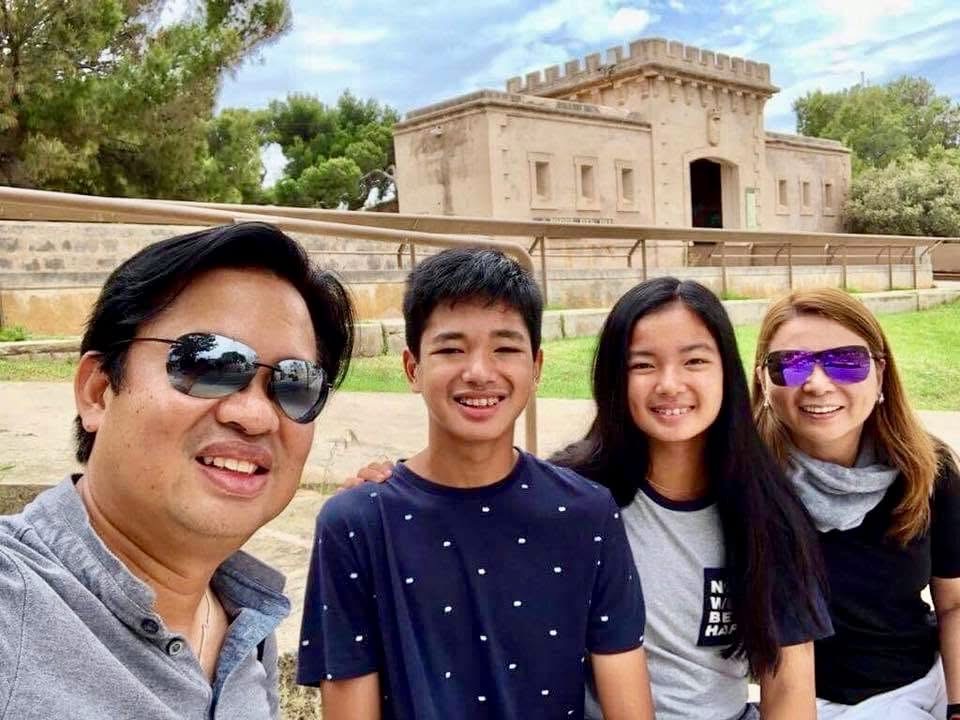
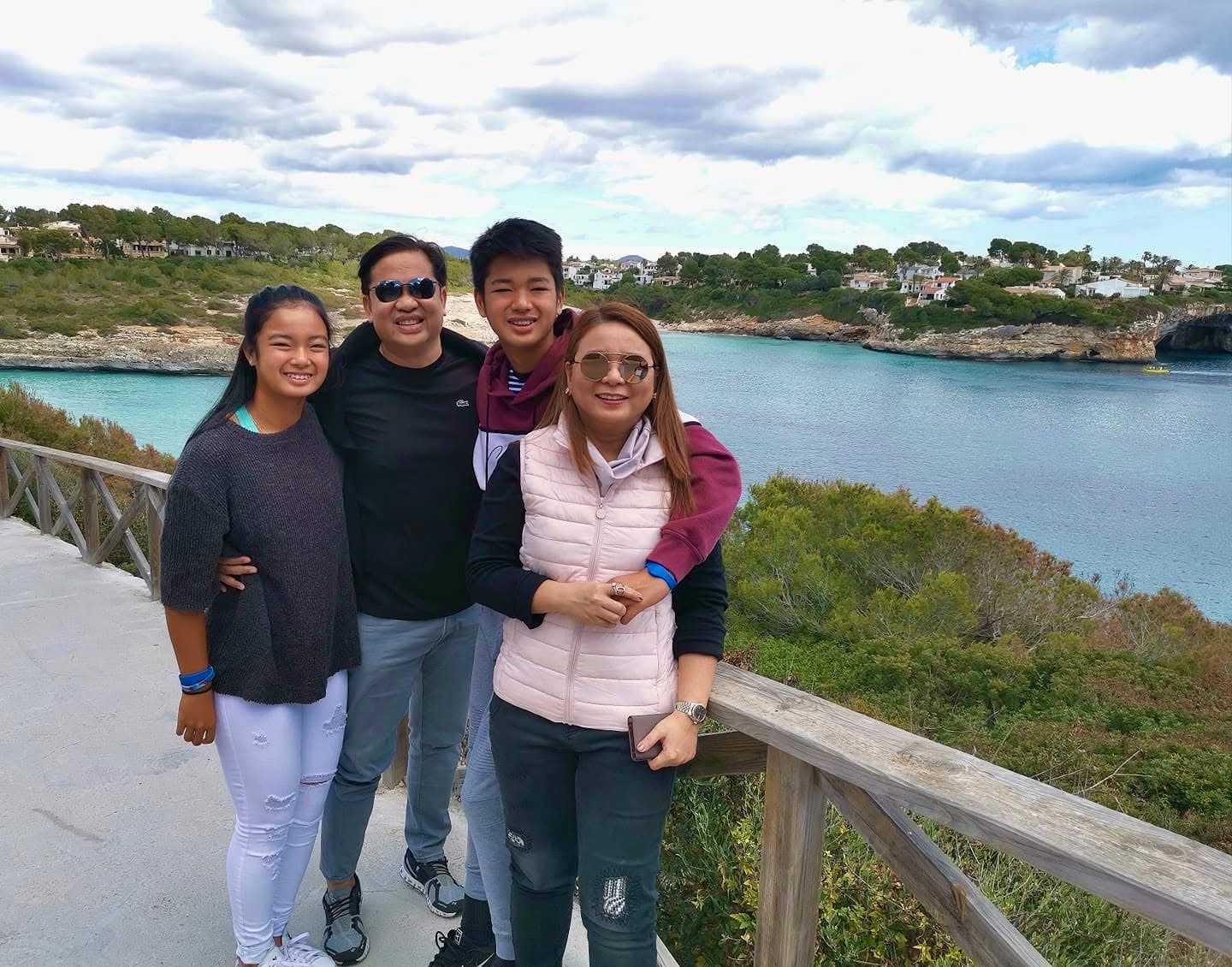
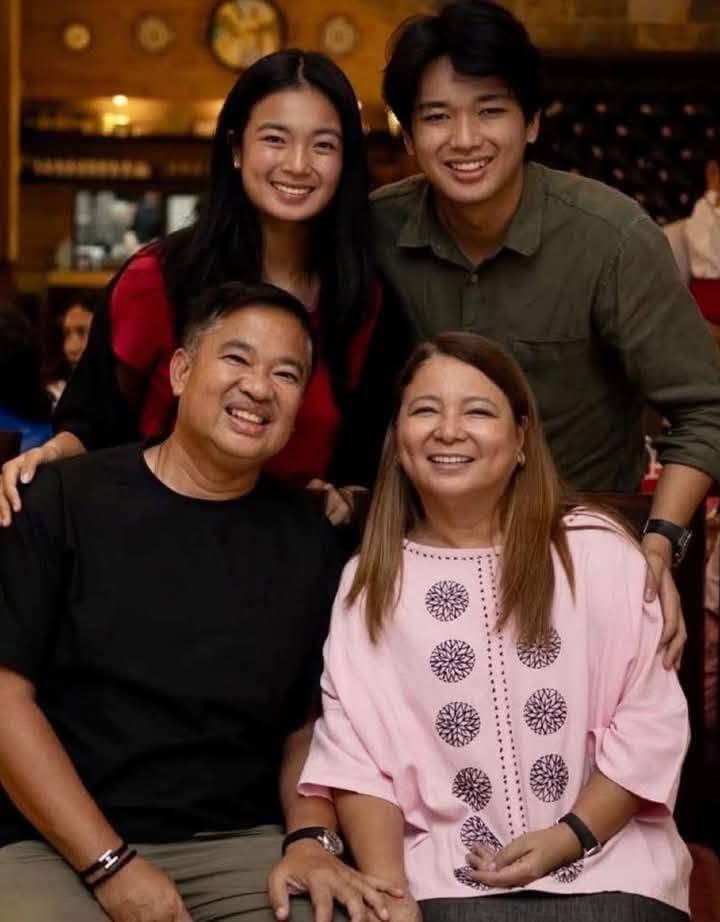
Alex’s late grandfather, Robert “Lolo Bob” Maniego, together with her parents, Mike and Rizza Eala, helped create an environment where Alex and her older brother, Miko, could grow not only as athletes, but as people.

Their journey was never simply about producing champions. It was about giving their children love, education, discipline, opportunity, and the freedom to pursue their dreams.

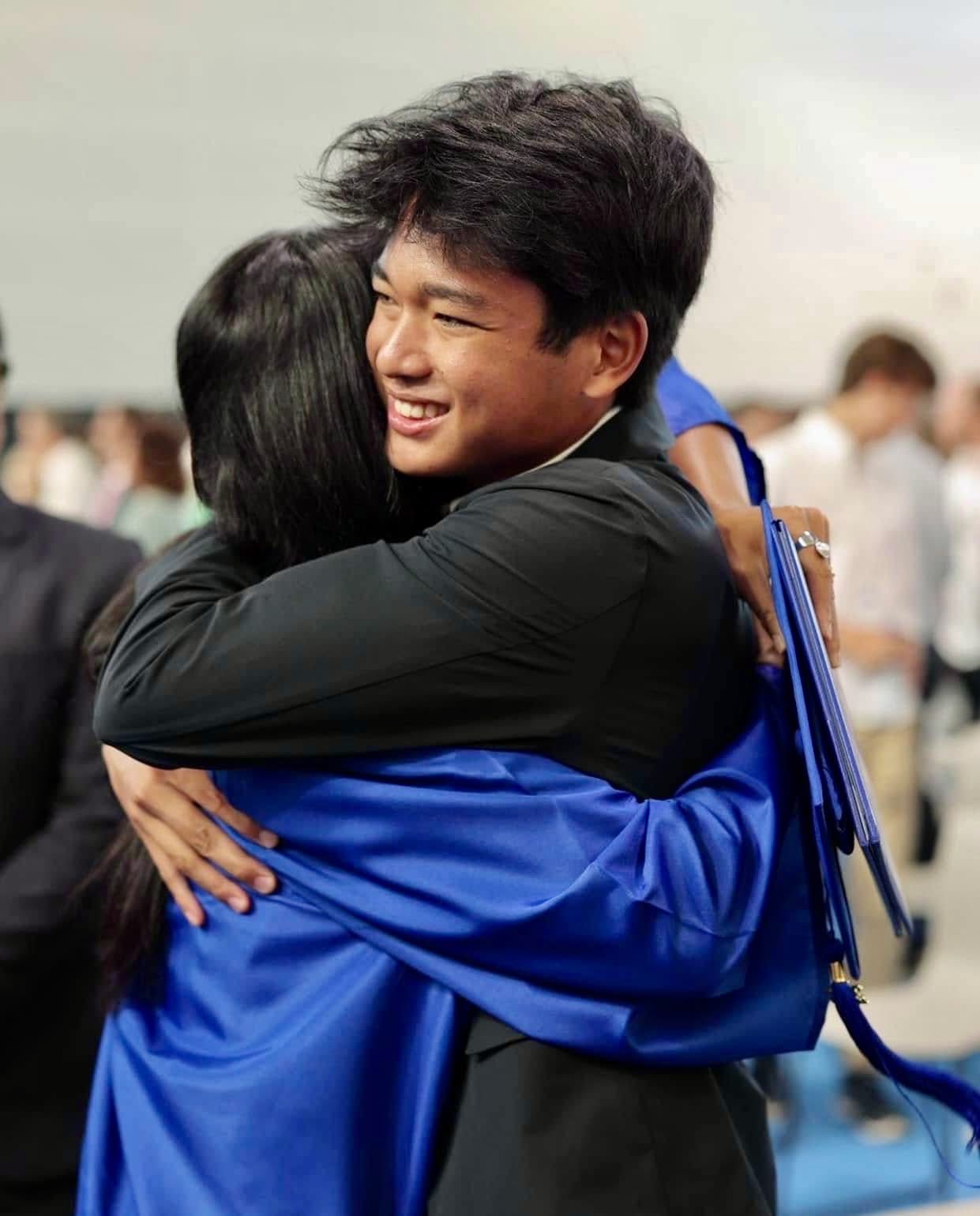
As Alex and Miko developed their passion for tennis, their family stood behind them—supporting, encouraging, sacrificing, and believing in them without needing to take center stage.

And perhaps that is one of the most beautiful parts of Alex’s story.

While the world celebrates her victories, the people who helped build her foundation have largely remained where they have always been: behind her, quietly cheering.

They remind us that sometimes the strongest support does not need to be loud.

WHY THIS MATTERS

We live in a world where success is often associated with fame, influence, connections, and visibility. But the Eala family’s story offers another perspective:

Character is often built away from the cameras.

Before the world sees the champion, there are years of discipline, sacrifice, education, setbacks, encouragement, and unconditional love that few people ever witness.

The greatest foundation may not be the trophies on the shelf, but the values carried in the heart.


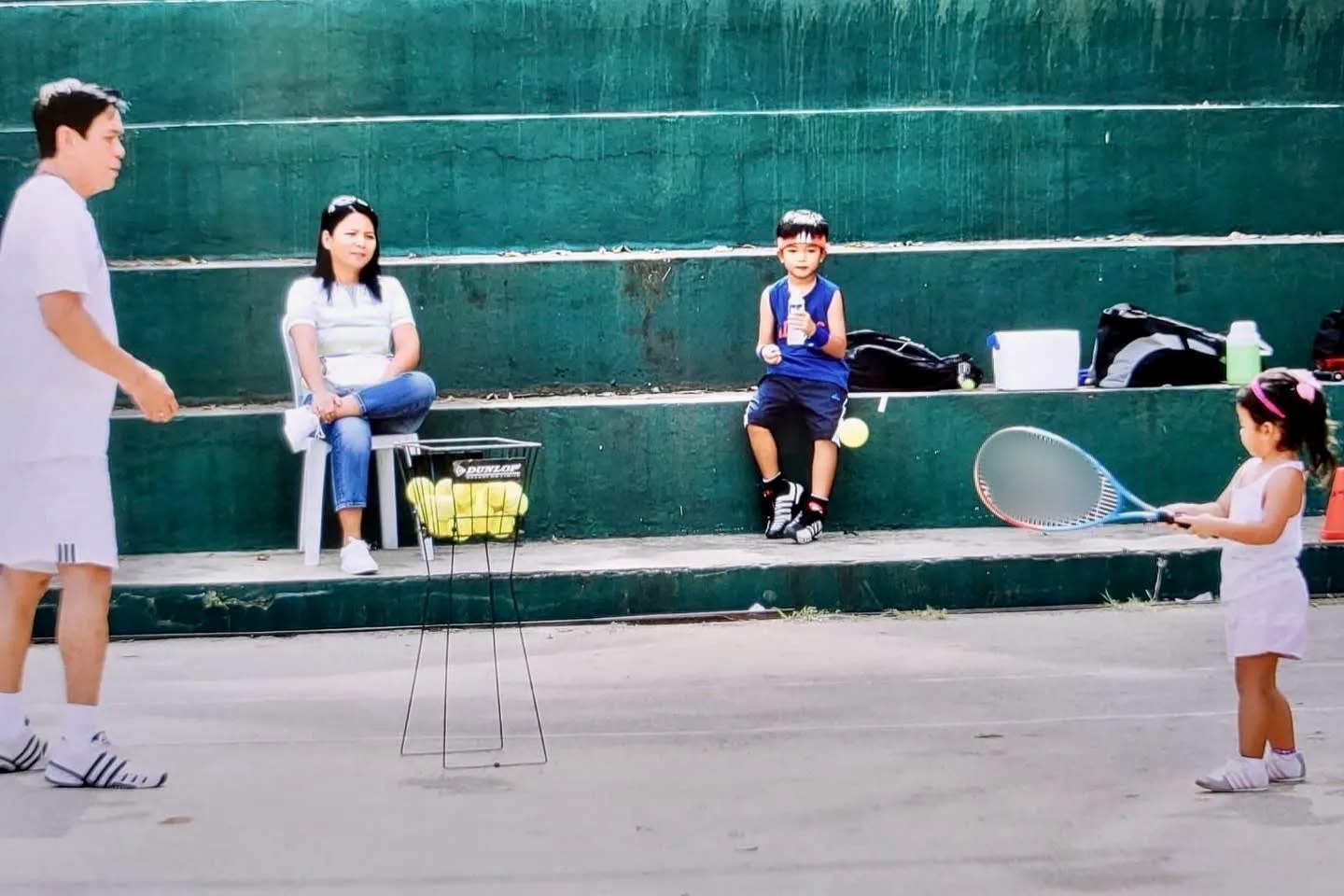
Tignan mo mabuti kuya Miko…

Take a closer look at Kuya Miko.

His water bottle is already open and lifted, just about to be brought to his lips. But he stops mid-air. 

The reason? His three-year-old little sister has just taken a swing. It’s a young Alex Eala, her racquet almost as big as she is, making her first attempt at tennis under the watchful eye of her coach, Lolo Papa. Their mom lovingly watch in the background, while her brother pauses everything to watch her perform. This was before Rafa Nadal Academy, before the trophies, and before the world recognized her name. 

In the bleachers, with a bottle in hand, Kuya Miko decided that his little sister's small moment mattered more than his own break. 

That’s how champions are truly nurtured—not just through drills and baskets of Dunlop balls, but by a family that watches, waits, and cheers for every little swing. 

The promise remains the same over the years: "𝐈'𝐯𝐞 𝐠𝐨𝐭 𝐲𝐨𝐮, 𝐬𝐢𝐬. 𝐈’𝐦 𝐰𝐚𝐭𝐜𝐡𝐢𝐧𝐠."


VALUES WE CAN LEARN FROM THEIR STORY

  1. Raise good people first. Success means more when it is accompanied by character.
  2. Make education part of the foundation. Knowledge provides opportunities far beyond sports.
  3. Give children genuine love and support. A secure home can give them courage to face the world.
  4. Support their dreams without taking ownership of their success.
  5. Stay humble when recognition begins to arrive.
  6. Protect family relationships from the pressures of fame and outside expectations.
  7. Celebrate victories, but remain present during defeats.
  8. Grow together with mutual respect, sacrifice, and care.

SOMETHING WORTH REFLECTING ON

These values extend far beyond tennis.

Integrity. Hard work. Humility. Education. Discipline. Compassion. Family.

These are qualities we hope to see not only in athletes, but also in future professionals, public servants, community builders, and leaders.

Strong nations are ultimately built by people of character—and much of that character begins at home.

Alex Eala’s rise reminds us that behind many extraordinary achievements are ordinary moments the public never sees: parents making sacrifices, families encouraging one another, children learning discipline, and loved ones continuing to believe even when success is still far away.

The world may see Alex Eala the champion. 

But behind that champion is a foundation built through years of love, sacrifice, education, discipline, humility, and family.

And perhaps that is one of the most valuable victories of all. 

#AlexEala #EalaFamily #FamilyValues #FamilyFirst #Education #Discipline #Humility #FilipinoPride #ProudFilipino #Tennis #Inspiration