
Showing posts with label Fitness. Show all posts

Wednesday, September 09, 2026

THE QUIET FOUNDATION BEHIND ALEX EALA’S RISE


Behind the headlines, roaring crowds, historic victories, and growing international recognition of Alex Eala is something far more important than fame: family.

Long before the trophies and bright lights, there was a strong foundation built at home.

Alex’s late grandfather, Robert “Lolo Bob” Maniego, together with her parents, Mike and Rizza Eala, helped create an environment where Alex and her older brother, Miko, could grow not only as athletes, but as people.

Their journey was never simply about producing champions. It was about giving their children love, education, discipline, opportunity, and the freedom to pursue their dreams.

As Alex and Miko developed their passion for tennis, their family stood behind them—supporting, encouraging, sacrificing, and believing in them without needing to take center stage.

And perhaps that is one of the most beautiful parts of Alex’s story.

While the world celebrates her victories, the people who helped build her foundation have largely remained where they have always been: behind her, quietly cheering.

They remind us that sometimes the strongest support does not need to be loud.

WHY THIS MATTERS

We live in a world where success is often associated with fame, influence, connections, and visibility. But the Eala family’s story offers another perspective:

Character is often built away from the cameras.

Before the world sees the champion, there are years of discipline, sacrifice, education, setbacks, encouragement, and unconditional love that few people ever witness.

The greatest foundation may not be the trophies on the shelf, but the values carried in the heart.


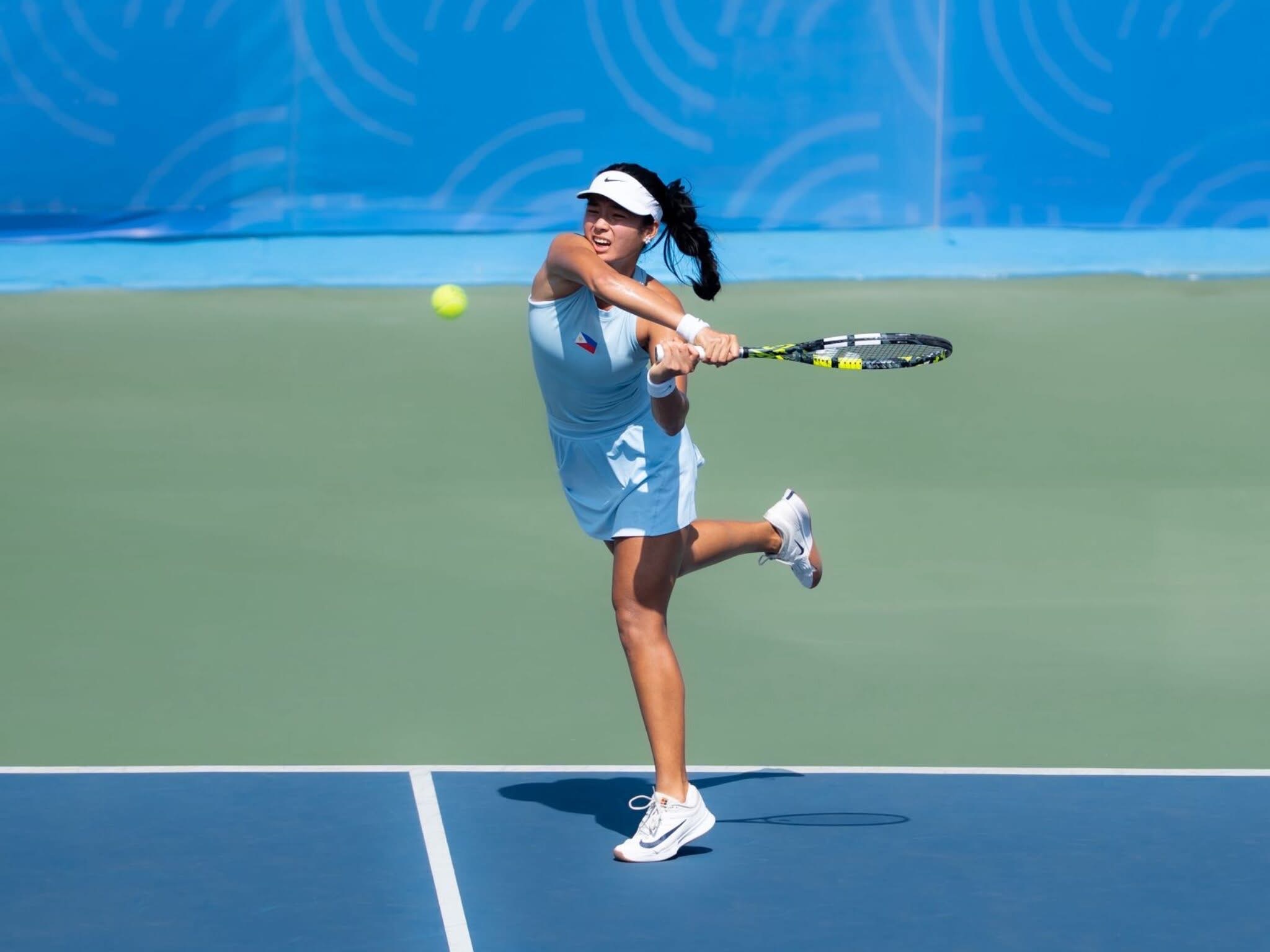
Tignan mo mabuti kuya Miko…

Take a closer look at Kuya Miko.

His water bottle is already open and lifted, just about to be brought to his lips. But he stops mid-air. 

The reason? His three-year-old little sister has just taken a swing. It’s a young Alex Eala, her racquet almost as big as she is, making her first attempt at tennis under the watchful eye of her coach, Lolo Papa. Their mom lovingly watch in the background, while her brother pauses everything to watch her perform. This was before Rafa Nadal Academy, before the trophies, and before the world recognized her name. 

In the bleachers, with a bottle in hand, Kuya Miko decided that his little sister's small moment mattered more than his own break. 

That’s how champions are truly nurtured—not just through drills and baskets of Dunlop balls, but by a family that watches, waits, and cheers for every little swing. 

The promise remains the same over the years: "𝐈'𝐯𝐞 𝐠𝐨𝐭 𝐲𝐨𝐮, 𝐬𝐢𝐬. 𝐈’𝐦 𝐰𝐚𝐭𝐜𝐡𝐢𝐧𝐠."


VALUES WE CAN LEARN FROM THEIR STORY

  1. Raise good people first. Success means more when it is accompanied by character.
  2. Make education part of the foundation. Knowledge provides opportunities far beyond sports.
  3. Give children genuine love and support. A secure home can give them courage to face the world.
  4. Support their dreams without taking ownership of their success.
  5. Stay humble when recognition begins to arrive.
  6. Protect family relationships from the pressures of fame and outside expectations.
  7. Celebrate victories, but remain present during defeats.
  8. Grow together with mutual respect, sacrifice, and care.

SOMETHING WORTH REFLECTING ON

These values extend far beyond tennis.

Integrity. Hard work. Humility. Education. Discipline. Compassion. Family.

These are qualities we hope to see not only in athletes, but also in future professionals, public servants, community builders, and leaders.

Strong nations are ultimately built by people of character—and much of that character begins at home.

Alex Eala’s rise reminds us that behind many extraordinary achievements are ordinary moments the public never sees: parents making sacrifices, families encouraging one another, children learning discipline, and loved ones continuing to believe even when success is still far away.

The world may see Alex Eala the champion. 

But behind that champion is a foundation built through years of love, sacrifice, education, discipline, humility, and family.

And perhaps that is one of the most valuable victories of all. 

#AlexEala #EalaFamily #FamilyValues #FamilyFirst #Education #Discipline #Humility #FilipinoPride #ProudFilipino #Tennis #Inspiration

Saturday, August 29, 2026

Alex Eala & Her Dad Share a Memorable US Open Moment With Iva Jovic & Her Dad

One of the most heartwarming moments at the US Open in New York wasn’t just about competition—it was about family, support, and the special bond between fathers and daughters

Filipina tennis star Alex Eala and her dad shared the court with Iva Jovic and her dad, creating a memorable #GirlDads moment in front of an enthusiastic crowd.

Watching the moment live made it even more special. The atmosphere was filled with smiles, cheers, laughter, and excitement as the two father-daughter pairs enjoyed their time together on the tennis court.

Behind Every Athlete Is a Strong Support System

Professional tennis demands years of training, sacrifice, travel, discipline, and determination. Behind many successful athletes are parents and families who have supported them long before they reached the biggest stages.

For Alex Eala and Iva Jovic, seeing their dads beside them on a US Open court was a wonderful reminder of that journey.

It wasn’t simply about winning or losing. It was about appreciating the people who helped make the dream possible.

A Special Moment for Alex Eala Fans

For Filipino tennis fans, seeing Alex continue to experience memorable moments on the international stage is something to celebrate.

Her journey has inspired many young athletes who dream of representing the Philippines in world tennis. 

And this time, Dad got to be part of the action!

A Beautiful #GirlDads Moment

Proud dads. Strong daughters. Unforgettable memories.

Sometimes the most memorable moments in sports happen beyond the official competition. This was one of them—a celebration of family, love, support, and tennis.

Family. Support. Passion. That’s what champions are made of. 


What do you think of this special father-and-daughter US Open moment? Share your thoughts in the comments!

#AlexEala #IvaJovic #USOpen #Tennis #GirlDads #ProudDad #TennisFamily #FamilySupport #FilipinoPride #TeamEala #Philippines #USOpenTennis


Monday, August 10, 2026

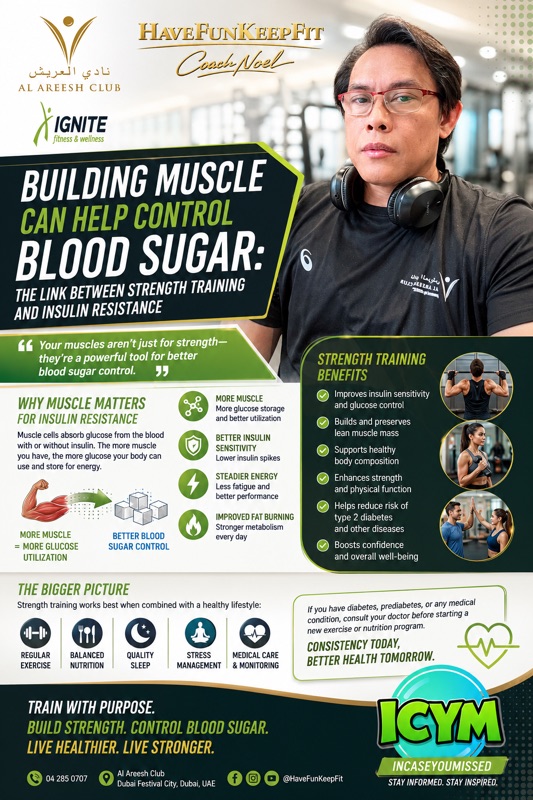
Building Muscle Can Help Control Blood Sugar: The Link Between Strength Training and Insulin Resistance

When people talk about controlling blood sugar, the conversation usually focuses on cutting sugar, reducing carbohydrates, or losing weight. But there’s another important part of the picture that deserves more attention: muscle mass.

Skeletal muscle is one of the body’s major places for using and storing glucose. After we eat carbohydrates, they are broken down into glucose and released into the bloodstream. Insulin helps move that glucose into cells, including muscle cells, where it can be used for energy or stored as glycogen.

Why Muscle Matters for Insulin Resistance

Insulin resistance happens when the body’s cells do not respond to insulin as effectively as they should. As a result, the pancreas may need to produce more insulin to keep blood glucose under control.

Regular exercise—especially resistance training—can improve the way muscles use glucose and respond to insulin. Building or maintaining muscle also gives the body more metabolically active tissue that can use glucose.

In simple terms:

More active muscle → greater glucose utilization → improved insulin sensitivity → better blood-sugar management.

However, building muscle does not automatically prevent blood-sugar spikes, and it is not a replacement for medication, nutrition, sleep, weight management, or medical care when these are needed.

Strength Training Is More Than Building a Better Physique

Resistance training can provide benefits far beyond appearance. A well-designed strength program may help:

  • Improve insulin sensitivity and glucose control
  • Build and preserve lean muscle mass
  • Increase strength and physical function
  • Support healthy body composition
  • Improve metabolic health
  • Help with long-term weight management

Even basic exercises such as squats, presses, rows, resistance-band movements, and appropriately programmed machine exercises can contribute when performed consistently.

Combine Strength Training With the Bigger Picture

The strongest approach to metabolic health is not simply “eat less sugar” or “lift more weights.” It combines regular resistance training, aerobic activity, balanced nutrition, sufficient protein and fiber, quality sleep, stress management, and appropriate medical treatment.

For people with diabetes, prediabetes, or other medical conditions, exercise intensity and nutrition should be individualized with guidance from qualified healthcare professionals.

Final Thought

Your muscles aren’t only for strength—they’re also an important part of your metabolic health.

Build muscle. Stay active. Eat intelligently. Be consistent.

Fitness is not only about how your body looks. It is about helping your body function better for years to come.

HaveFunKeepFit 
Train for strength. Train for health. Train for life.

#HaveFunKeepFit #InsulinResistance #BloodSugar #DiabetesAwareness #StrengthTraining #BuildMuscle #FitnessEducation #MetabolicHealth #HealthyLifestyle #ResistanceTraining #CoachOel


Monday, July 27, 2026

Seven Exercises That Build More Than Just Six-Pack Abs

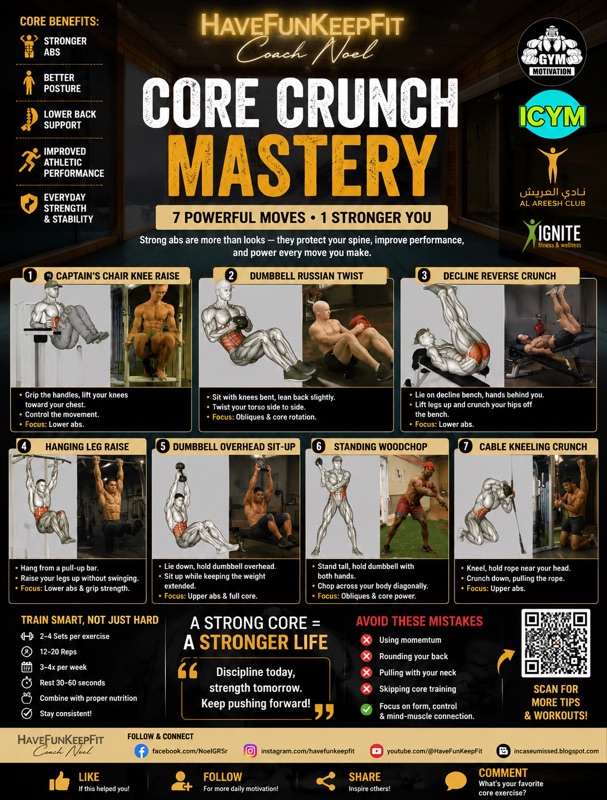
CORE CRUNCH MASTERY: 7 Exercises That Build More Than Just Six-Pack Abs

Introduction

When people think about core training, the first thing that comes to mind is getting six-pack abs. While a defined midsection is a common goal, the true purpose of core training goes far beyond appearance. A strong core supports your spine, improves posture, enhances athletic performance, and makes everyday movements easier and safer.

The workout featured in this guide combines seven highly effective exercises that challenge every section of your abdominal muscles—from the upper and lower abs to the obliques and deep stabilizing muscles responsible for balance and strength.


Why Core Training Matters

Your core is the center of nearly every movement your body performs. Whether you’re lifting weights, running, playing sports, carrying groceries, or simply standing upright, your abdominal and lower back muscles work together to stabilize your body.

A weak core can contribute to:

  • Poor posture
  • Lower back pain
  • Reduced athletic performance
  • Poor balance and coordination
  • Increased injury risk

A stronger core helps transfer power efficiently between your upper and lower body, making every exercise more effective.


The Seven Core Exercises

1. Captain’s Chair Knee Raise

Primary Muscles:

  • Lower Rectus Abdominis
  • Hip Flexors

Benefits

  • Develops lower abdominal strength
  • Improves hip stability
  • Excellent beginner-to-intermediate movement

Coaching Tips

  • Lift your knees under control.
  • Avoid swinging your legs.
  • Keep your shoulders relaxed.


2. Dumbbell Russian Twist

Primary Muscles

  • Internal Obliques
  • External Obliques
  • Rectus Abdominis

Benefits

  • Builds rotational strength
  • Improves sports performance
  • Develops waist stability

Coaching Tips

Rotate your torso—not just your arms—and maintain a tall chest throughout the movement.


3. Decline Reverse Crunch

Primary Muscles

  • Lower Abs
  • Deep Core Stabilizers

Benefits

  • Greater range of motion than floor reverse crunches
  • Excellent lower abdominal activation
  • Reduces hip flexor dominance

Coaching Tips

Roll your hips upward instead of simply lifting your legs.


4. Hanging Leg Raise

Often considered one of the most challenging bodyweight abdominal exercises.

Benefits

  • Builds tremendous lower abdominal strength
  • Improves grip strength
  • Enhances shoulder stability

Coaching Tips

Avoid swinging. Lift your legs using your abdominal muscles rather than momentum.


5. Dumbbell Overhead Sit-Up

Holding a dumbbell overhead increases the stability demand throughout the entire movement.

Benefits

  • Improves shoulder stability
  • Strengthens upper abs
  • Enhances total-body coordination

Coaching Tips

Choose a manageable weight and maintain straight arms throughout the exercise.


6. Standing Dumbbell Wood Chop

This movement mimics real-life rotational patterns.

Benefits

  • Builds rotational power
  • Improves athletic performance
  • Strengthens obliques and core

Coaching Tips

Rotate through your hips and torso together while keeping your movements controlled.


7. Cable Kneeling Crunch

A classic exercise for building thicker abdominal muscles.

Benefits

  • Constant resistance
  • Easy to progressively overload
  • Excellent upper abdominal activation

Coaching Tips

Focus on curling your spine rather than simply pulling the rope with your arms.

Suggested Workout

Exercise

Sets

Reps

Captain’s Chair Knee Raise

3–4

12–15

Russian Twist

3

20 total

Decline Reverse Crunch

3

12–15

Hanging Leg Raise

3

8–12

Dumbbell Overhead Sit-Up

3

10–12

Standing Wood Chop

3

12 each side

Cable Kneeling Crunch

3–4

12–15


Rest: 30–60 seconds between sets.

Perform this workout 2–3 times per week for optimal results.

Common Mistakes to Avoid

❌ Using momentum instead of muscle control

❌ Pulling on your neck during crunches

❌ Holding your breath throughout the movement

❌ Training abs every day without allowing recovery

❌ Ignoring nutrition while expecting visible abs


Can You Get Six-Pack Abs From These Exercises Alone?

Not entirely.

Strong abdominal muscles can be developed through resistance training, but visible abs largely depend on maintaining a low enough body fat percentage. For most people, this requires:

  • A calorie-controlled diet
  • High-protein nutrition
  • Consistent strength training
  • Regular cardiovascular exercise
  • Adequate sleep and recovery

Remember: Abs are strengthened in the gym but revealed through proper nutrition.


Coach Noel’s Perspective

Many gym-goers spend countless hours doing crunches while overlooking the importance of total-body training and proper eating habits. A stronger core isn’t just about looking good—it’s about moving better, lifting heavier, reducing injury risk, and improving your overall quality of life.

Choose quality repetitions over high repetition counts. Slow, controlled movements with proper technique will always outperform rushed, momentum-based exercises.


Conclusion

Building a stronger core takes consistency, patience, and smart programming. These seven exercises provide an excellent combination of stability, strength, and muscle development that can benefit beginners and experienced lifters alike.

Train with purpose, stay disciplined, fuel your body wisely, and remember that every workout is another step toward becoming stronger than yesterday.


Connect With HaveFunKeepFit

Coach Noel
HaveFunKeepFit
Al Areesh Club – Ignite Fitness & Wellness


Follow

📘 Facebook: NoelGRSr
📸 Instagram: @havefunkeepfit
▶️ YouTube: @HaveFunKeepFit


Hashtags

#HaveFunKeepFit #CoachNoel #CoreTraining #AbsWorkout #FitnessEducation #StrengthTraining #GymTips #FunctionalFitness #HealthyLifestyle #WorkoutMotivation #TrainSmart #CoreStrength #FitnessBlog #IgniteFitness #AlAreeshClub


Share Your Thoughts

Which core exercise gives you the biggest challenge—and why? Let us know in the comments, and share your favorite ab training tips with the HaveFunKeepFit community!