Showing posts with label Fitness and Health. Show all posts

Monday, August 10, 2026

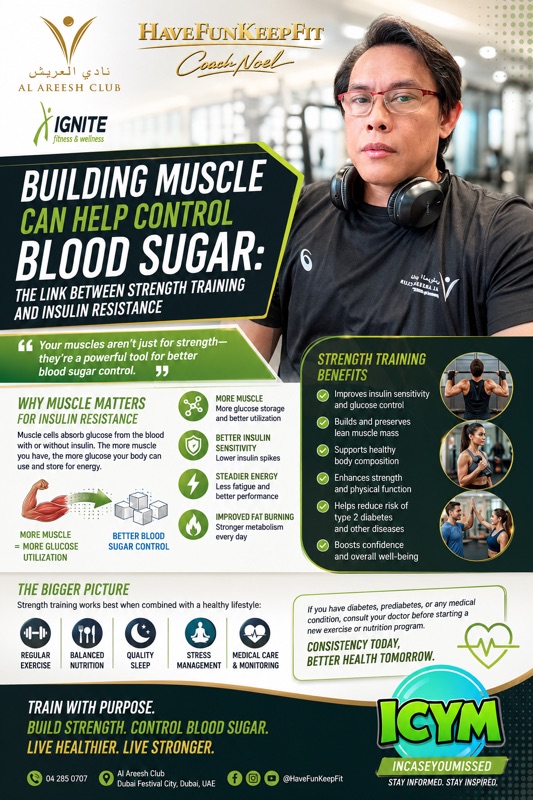
Building Muscle Can Help Control Blood Sugar: The Link Between Strength Training and Insulin Resistance

​

When people talk about controlling blood sugar, the conversation usually focuses on cutting sugar, reducing carbohydrates, or losing weight. But there’s another important part of the picture that deserves more attention: muscle mass.

Skeletal muscle is one of the body’s major places for using and storing glucose. After we eat carbohydrates, they are broken down into glucose and released into the bloodstream. Insulin helps move that glucose into cells, including muscle cells, where it can be used for energy or stored as glycogen.

Why Muscle Matters for Insulin Resistance

Insulin resistance happens when the body’s cells do not respond to insulin as effectively as they should. As a result, the pancreas may need to produce more insulin to keep blood glucose under control.

Regular exercise—especially resistance training—can improve the way muscles use glucose and respond to insulin. Building or maintaining muscle also gives the body more metabolically active tissue that can use glucose.

In simple terms:

More active muscle → greater glucose utilization → improved insulin sensitivity → better blood-sugar management.

However, building muscle does not automatically prevent blood-sugar spikes, and it is not a replacement for medication, nutrition, sleep, weight management, or medical care when these are needed.

Strength Training Is More Than Building a Better Physique

Resistance training can provide benefits far beyond appearance. A well-designed strength program may help:

  • Improve insulin sensitivity and glucose control
  • Build and preserve lean muscle mass
  • Increase strength and physical function
  • Support healthy body composition
  • Improve metabolic health
  • Help with long-term weight management

Even basic exercises such as squats, presses, rows, resistance-band movements, and appropriately programmed machine exercises can contribute when performed consistently.

Combine Strength Training With the Bigger Picture

The strongest approach to metabolic health is not simply “eat less sugar” or “lift more weights.” It combines regular resistance training, aerobic activity, balanced nutrition, sufficient protein and fiber, quality sleep, stress management, and appropriate medical treatment.

For people with diabetes, prediabetes, or other medical conditions, exercise intensity and nutrition should be individualized with guidance from qualified healthcare professionals.

Final Thought

Your muscles aren’t only for strength—they’re also an important part of your metabolic health.

Build muscle. Stay active. Eat intelligently. Be consistent.

Fitness is not only about how your body looks. It is about helping your body function better for years to come.

HaveFunKeepFit 
Train for strength. Train for health. Train for life.

#HaveFunKeepFit #InsulinResistance #BloodSugar #DiabetesAwareness #StrengthTraining #BuildMuscle #FitnessEducation #MetabolicHealth #HealthyLifestyle #ResistanceTraining #CoachOel


Wednesday, February 11, 2026

Did Rockefeller “invent” eating 3–6 times a day to sell food?


No historical evidence supports the claim that John D. Rockefeller or the Rockefeller Foundation created the idea of eating 3–6 meals a day.

People have eaten multiple meals per day long before the Rockefellers existed:


Before Rockefeller (Ancient–1800s)

• Ancient Romans: Usually 2 meals/day

• Medieval Europe: 2–3 meals/day

• Industrial Revolution: Workers started eating 3 meals/day because of factory schedules


The 3-meal pattern became routine because of work hours, not billionaires.


Where did “eat 5–6 small meals” come from?


This idea became popular much later, around the 1970s–1990s, pushed by:


✔ Bodybuilders & fitness magazines


They promoted 5–6 meals to:

• “Boost metabolism” (which we now know is not really true)

• Keep protein intake constant

• Avoid hunger during long training days


✔ Nutritionists & diet programs


Registered dietitians in the 80s–90s used small, frequent meals for:

• Blood sugar management

• Weight-loss strategies

• Appetite control


✔ Food companies (yes, partly)


Snacks, cereals, and packaged foods did benefit from the idea of eating more frequently — but they did not invent the concept. They simply marketed around it.


Modern Science Today


Current research shows:


You can lose weight or stay healthy with:

• 1 meal/day (OMAD)

• 2 meals/day

• 3 meals/day

• 6 meals/day


As long as:

• Calories are controlled

• Protein is high

• Quality of food is good

• Meal timing supports your lifestyle


There is no single “correct” number of meals.


📌 Coach Noel Fitness Insight 


For fat loss, muscle gain, and metabolic health, the best structure is the one the client can sustain:


For most clients:

• 3 meals + 1 protein snack works best

• Keeps hunger low

• Supports training

• Helps hit protein targets


But not because of Rockefeller —

because of habit, convenience, and adherence.


Summary


❌ The idea “Rockefeller created 3–6 meals a day to sell food” is not historically accurate.

✔ Food companies did take advantage of the idea, but they didn’t invent it.

✔ Humans have eaten multiple meals per day for centuries.

✔ Modern science says meal frequency is flexible — choose what fits the goal.


#NutritionFacts

#FitnessMyths

#MealFrequency

#CoachNoel

#HaveFunKeepFit

#HealthEducation

#FatLossTips

#MuscleGainTips

#FitnessUAE

#WellnessGuide

@havefunkeepfit

@CoachOel

@InCaseYouMissed


Tuesday, February 18, 2025

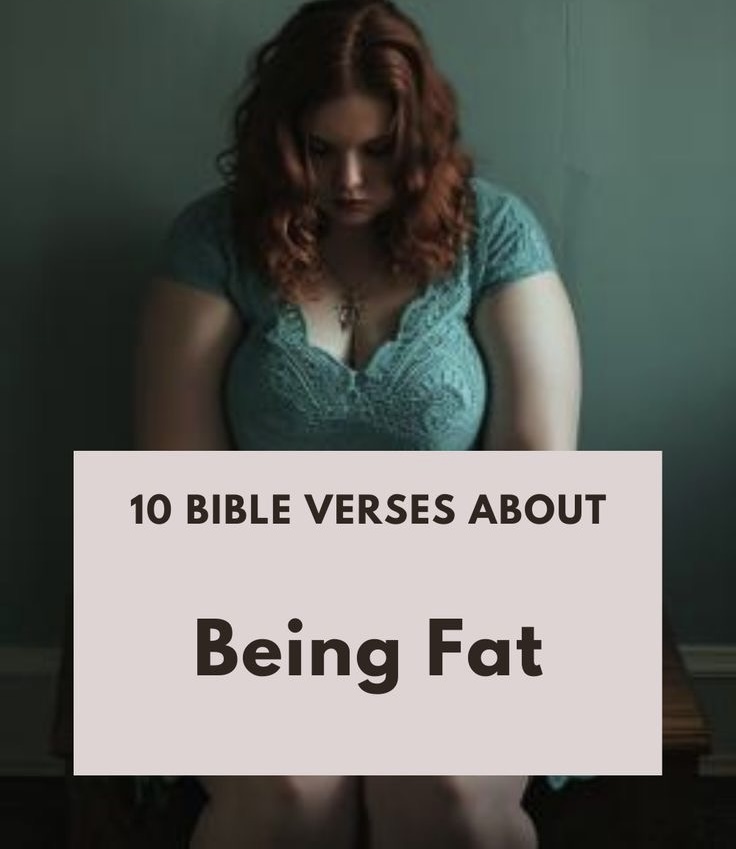
10 Bible Verses About Being Fat

What Does the Bible Say About Being Fat?

Weight is a topic that many people think about, whether for health, appearance, or self-esteem.

In today’s world, body image is often a big concern, and people wonder what the Bible says about being overweight.

Does God care about our physical bodies?


Does being overweight mean someone is sinning?

Let’s explore what Scripture really teaches about weight, health, and how we should see ourselves in God’s eyes.

Does the Bible Say Anything About Being Overweight?

The Bible does not directly say that being overweight is a sin.

There are no verses that condemn a person simply for their body size.

However, the Bible does talk about self-control, caring for the body, and avoiding gluttony.

1 Corinthians 6:19-20 says, “Do you not know that your bodies are temples of the Holy Spirit, who is in you, whom you have received from God? You are not your own; you were bought at a price. Therefore, honor God with your bodies.”

This verse reminds us that our bodies belong to God, and we should care for them.

That doesn’t mean we have to be a certain weight, but it does encourage us to live in a way that is healthy and honors God.

Gluttony vs. Being Overweight

Some people assume that being overweight automatically means someone is guilty of gluttony.

However, these two things are not always the same.

Gluttony is defined as excessive eating and overindulgence.

Proverbs 23:20-21 warns, “Do not join those who drink too much wine or gorge themselves on meat, for drunkards and gluttons become poor, and drowsiness clothes them in rags.”

This verse shows that overeating and overdrinking can lead to negative consequences. However, not everyone who is overweight eats excessively.

Many factors can contribute to a person’s weight, including genetics, medical conditions, stress, and life circumstances.

Instead of judging others, the Bible encourages self-examination and kindness.

Romans 14:3 says, “The one who eats everything must not treat with contempt the one who does not, and the one who does not eat everything must not judge the one who does, for God has accepted them.”

This means that food choices and body size should not be reasons for judgment.

God looks at the heart, not just the outward appearance.

The Importance of Self-Control

While being overweight is not a sin, the Bible does emphasize self-control.

Galatians 5:22-23 lists self-control as one of the fruits of the Spirit.

This means that part of living a God-honoring life is being mindful of our actions, including how we eat and care for our bodies.

Philippians 4:5 says, “Let your gentleness be evident to all. The Lord is near.”

This applies to how we treat our bodies as well. We should strive for balance—eating in a way that nourishes the body while also enjoying food in moderation.

The goal is not to focus on weight alone but to develop a lifestyle that is both spiritually and physically healthy.

Does God Care About Appearance?

In a world that often judges people by how they look, it’s important to remember that God does not see us the way the world does.

1 Samuel 16:7 says, “The Lord does not look at the things people look at. People look at the outward appearance, but the Lord looks at the heart.”

God is far more concerned with our character than our clothing size.

He does not define a person’s worth by their weight.

What matters most is our relationship with Him, our love for others, and the way we live our lives.

Society may place high importance on appearance, but God values the heart above all else.
Taking Care of the Body Without Obsession

Caring for our health is important, but the Bible also warns against obsessing over physical appearance.

1 Timothy 4:8 says, “For physical training is of some value, but godliness has value for all things, holding promise for both the present life and the life to come.”

This verse acknowledges that physical health has benefits, but it also reminds us that spiritual health is even more important.

A healthy lifestyle is good, but it should not become an idol.

Our identity should be rooted in Christ, not in a number on a scale.

Finding Confidence in God’s Love

Many people struggle with body image and self-worth.

The good news is that our value is not based on what we weigh, but on the fact that we are loved by God.

Psalm 139:14 says, “I praise you because I am fearfully and wonderfully made; your works are wonderful, I know that full well.”

Each person is created by God with care and purpose.

Weight does not change God’s love for us.

No matter how we look, we are valuable in His eyes.

Should Christians Diet?

Many Christians wonder if it is okay to go on a diet.

There is nothing wrong with making healthier choices, but the Bible encourages balance rather than extremes.

Ecclesiastes 3:13 says, “That each of them may eat and drink, and find satisfaction in all their toil—this is the gift of God.”

Food is a blessing, not something to fear.

If someone chooses to diet, it should be done in a way that is sustainable and healthy, not in a way that leads to guilt or frustration.

Whatever we do, it should be done with a heart that seeks to honor God.

Encouraging Others Instead of Judging

Christians are called to build one another up, not tear each other down.

Ephesians 4:29 says, “Do not let any unwholesome talk come out of your mouths, but only what is helpful for building others up according to their needs, that it may benefit those who listen.”

Shaming others for their weight does not reflect God’s love.

Instead, we should encourage each other in kindness, supporting one another in both physical and spiritual health.

Jesus spent time with all kinds of people and showed love to everyone, regardless of their appearance.

As His followers, we should do the same.

Balancing Health and Enjoying Life

The Bible does not demand perfection when it comes to eating or body size.

It teaches balance.

Proverbs 25:16 says, “If you find honey, eat just enough—too much of it, and you will vomit.”

This verse highlights moderation.

It is okay to enjoy food, but overindulgence can lead to problems.

Likewise, completely avoiding enjoyable foods out of fear can also be unhealthy.

A balanced approach—one that includes nourishment, enjoyment, and gratitude—is the best way to care for the body while still honoring God.

Final Thoughts

The Bible does not condemn being overweight, nor does it say that body size determines a person’s worth.

God cares about the heart far more than physical appearance.

While the Bible encourages self-control and healthy living, it also reminds us that our identity is found in Christ, not in a number on a scale.

Instead of focusing on weight alone, believers should strive for a lifestyle that honors God in all areas—spiritually, mentally, and physically.

Whether a person is thin, heavy, or somewhere in between, God’s love remains the same.

True confidence comes from knowing we are created by Him, loved by Him, and valuable in His sight.

Our goal should be to honor God in everything we do, including how we care for our bodies, while also remembering that our worth is never based on our size.
Monday, December 12, 2022

The Right And Wrong Workout For Six Pack Abs!


The Right And Wrong Workout For Six Pack Abs!

The Right And Wrong Workout For Six Pack Abs!

Young boys and men are enthralled by the idea of abs training. If their partner has great abs, women love to show them off. While there is a wealth of knowledge and many gym instructors accessible to aid you in obtaining excellent abs, inaccurate information frequently leads to misunderstanding.


As a result, incorrect training strategies are used. Although you may be on the correct track to abs training, you may be making some mistakes that are preventing you from reaching your objectives. Here are most typical blunders you should avoid if you want to strengthen your abs. Correct these flaws to acquire toned abs:

Failure to perform compound exercises

While isolation exercises target your major muscle groups and help you tone up the muscles you want, you should also incorporate compound exercises into your workout routine. Squats, presses, and deadlifts are examples of compound exercises that engage your core and work more than one muscle group. To achieve effective results, make sure to include compound exercises in your training.

Starting with ab exercises

Working out on a daily basis is not a smart idea since, like other muscles, your abs require rest. Allow a day for your ab muscles to recuperate. If you can do crunches every day without any muscular pain, you might probably try a more difficult activity. While working on your abs, make sure to take a one-day break.


The Right And Wrong Workout For Six Pack Abs!


You Only Do Crunches

Crunches aren't the only technique to get your abs in shape. If you solely concentrate on crunches, you will not see any changes in your body over time. Other ab exercises that target the abs include ab wheel rollouts, barbell Russian twists, planks, and other similar workouts.

Not Putting Too Much Emphasis On Form

When performing abdominal workouts, make sure you follow the steps in the exact order. Even if you do a workout for a long time, it will be in vain if you do not perform the exercise correctly. Ensure that your abs are engaged during each rep.


The Right And Wrong Workout For Six Pack Abs!

Forgetting to Take Care of Your Lower Back

While you're working on your abs, make sure you're also working on your lower back. Because your core encompasses your back as well as your front, lower back exercises such as hyperextensions and deficit deadlifts are essential.

Failure to work from various angles

Because your core muscles run in all directions, you should make sure that your workout involves a variety of movements. Advanced exercises, such as windshield wipers, engage the entire core, including the obliques and lower back; however, if you find it too challenging, attempt other crunches to work on different angles.


Sharing is caring...

Tuesday, December 06, 2022

The Optimum Temperature For Gyms And Leisure Facilities

Gym and leisure facility use will result in perspiration, whether it’s from working out or relaxing in the sauna afterward. The use of a well-maintained air conditioning unit might assist keep you from becoming too hot when you’re working out hard. However, what is the ideal temperature for a gym or a leisure centre?

The Optimum Temperature For Gyms And Leisure Facilities

Gyms’ humidity and temperature can vary widely. Personalised service is possible in smaller facilities but fulfilling the comfort standards of customers in bigger ones may be challenging. Dehydration and heat stroke are risks that can be exacerbated. Extreme temperatures should be avoided no matter what heating and humidification options are chosen. If people have pre-existing conditions within the gym they should definitely be considered, as it is possible that extreme heat and cold could be very damaging to their conditions.

Why Is It Important to Have Efficient HVAC, Air Conditioning and Commercial Boiler Systems?

When it comes to gym or leisure centre temperatures, there aren’t any special rules in place. However, other safety standards at the gym are covered under generic health and safety legislation that gyms preferably have ceiling-mounted air conditioning units.

Despite the fact that there are no particular standards for indoor recreation areas, we can estimate how to attain the ideal temperature for these locations using the minimal criteria for workplaces.

A workplace’s ideal temperature should be 16°C. However, if the work involves rigorous physical exertion, the optimum environment temperature should be at 13°C. Again, this is not a legal necessity, but it provides you a sense of what a comfortable temperature is for exercising.

So what is the ideal gym temperature in celsius? Fitness experts say that working out inside is best done at a temperature between 13°C and 20°C. Whether you’re running on a treadmill, attending a step class, or lifting weights, this is the range most people can tolerate. This is similar to other leisure centres where moderate to light activities are performed, where the ideal temperature must be around 16°C to 20°C.

This is why it is very important to have an efficient HVAC system like air conditioning units and commercial boilers that work properly to provide the right temperature in your fitness gym or leisure facility.

Risks of High Temperatures in Gyms and Leisure Centres

When the gym is too hot, you’re already sweating before you’ve even started your workout. Working out in a hot gym is also a dangerous activity since it increases the risk of dehydration and heat stroke. When considering the ideal temperature for gyms it is best to consider what activity will be taking place, it is better to be slightly too cool rather than too warm.

The Optimum Temperature For Gyms And Leisure Facilities

Even excessive perspiration, on the other hand, might be harmful. Even if gym-goers perceive an extra pound of weight loss after their workout due to over-sweating, the weight lost is fluids from sweating and will be reversed if they drink enough water afterward. According to the research, working out for an extended amount of time in a hot gym might lead to training that is 50% less productive.

Risks of Low Temperatures in Gyms and Leisure Centres

While it is unusual that your fitness centre would be excessively cold, this can occasionally happen and it is just as bad as sweating it out in a hot gym. Working out in a cold environment increases the chance of injury. This is due to the fact that cold causes muscular spasms which is why warming up before physical activity is so important.

Our muscles work like rubber or clay. If exposed to extremely cold temperatures, they could lose malleability. The muscle will not stretch and instead will break.

Low temperatures can also be risky for people with pre-existing health conditions or people who are older, and these are probably not people you want to discourage from attending your gym. You can see why the ideal gym temperature is such a fine art!

How to Keep Gym and Leisure Centre Temperatures Perfectly Regulated 

In order to keep a gym or any other leisure centre at a constant, ideal temperature, the purpose of each space and the type of activities performed should be taken into account. Installing and performing regular maintenance to air conditioning units that offer low energy consumption models that match your carbon emission objectives.

Investing in an efficient HVAC system will assist manage a pleasant building temperature. It is also important to make sure that your air conditioning units or commercial boilers are working properly to maintain the optimal temperature for your gym or leisure facility.

Summary – Finding the Ideal Gym Temperature

If you want your customers to get the most out of each workout, make sure they are working out in a pleasant setting by keeping an eye on your HVAC system like air conditioning units and commercial boilers and making adjustments as needed.

If a gym or a leisure centre gets a bad rap for being excessively chilly or stuffy, patrons will eventually have to look for another place where they can work out more efficiently or relax more peacefully


Sharing is caring...