In Case You Missed

Keep an eye out in case you missed it, there was another version just in case anyone missed it the first time.

Main Menu

  • News
  • Health
  • Nutrition
  • Video
  • Sports
  • Fun
  • Fitness
  • Workout Routine
  • Tips
Showing posts with label Lifestyle Fitness. Show all posts

Tuesday, February 18, 2025

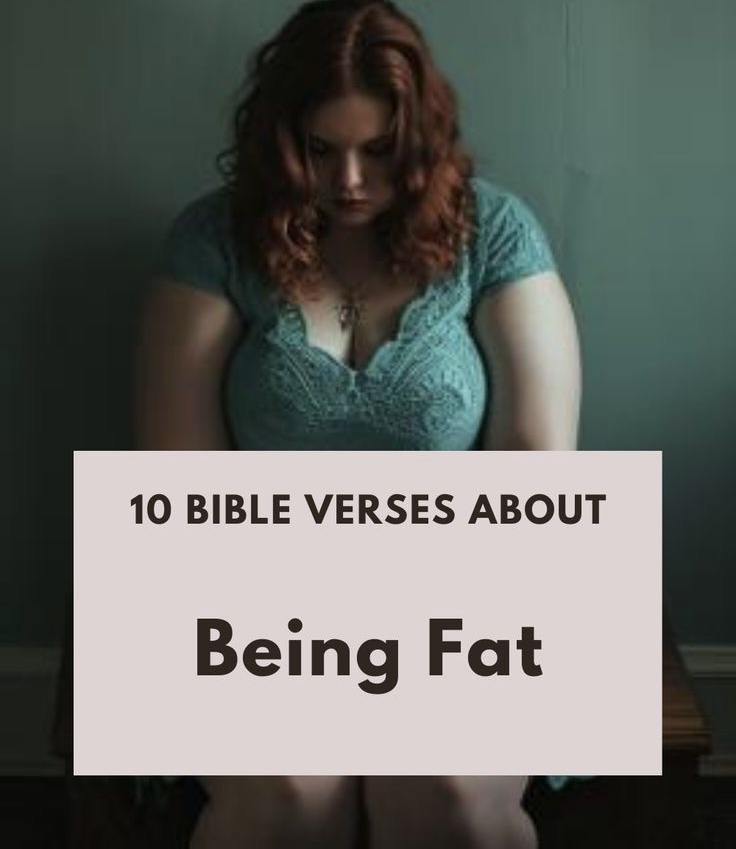
10 Bible Verses About Being Fat

What Does the Bible Say About Being Fat?


Weight is a topic that many people think about, whether for health, appearance, or self-esteem.

In today’s world, body image is often a big concern, and people wonder what the Bible says about being overweight.

Does God care about our physical bodies?


Does being overweight mean someone is sinning?

Let’s explore what Scripture really teaches about weight, health, and how we should see ourselves in God’s eyes.

Does the Bible Say Anything About Being Overweight?

The Bible does not directly say that being overweight is a sin.

There are no verses that condemn a person simply for their body size.

However, the Bible does talk about self-control, caring for the body, and avoiding gluttony.

1 Corinthians 6:19-20 says, “Do you not know that your bodies are temples of the Holy Spirit, who is in you, whom you have received from God? You are not your own; you were bought at a price. Therefore, honor God with your bodies.”

This verse reminds us that our bodies belong to God, and we should care for them.

That doesn’t mean we have to be a certain weight, but it does encourage us to live in a way that is healthy and honors God.

Gluttony vs. Being Overweight

Some people assume that being overweight automatically means someone is guilty of gluttony.

However, these two things are not always the same.

Gluttony is defined as excessive eating and overindulgence.

Proverbs 23:20-21 warns, “Do not join those who drink too much wine or gorge themselves on meat, for drunkards and gluttons become poor, and drowsiness clothes them in rags.”

This verse shows that overeating and overdrinking can lead to negative consequences. However, not everyone who is overweight eats excessively.

Many factors can contribute to a person’s weight, including genetics, medical conditions, stress, and life circumstances.

Instead of judging others, the Bible encourages self-examination and kindness.

Romans 14:3 says, “The one who eats everything must not treat with contempt the one who does not, and the one who does not eat everything must not judge the one who does, for God has accepted them.”

This means that food choices and body size should not be reasons for judgment.

God looks at the heart, not just the outward appearance.

The Importance of Self-Control

While being overweight is not a sin, the Bible does emphasize self-control.

Galatians 5:22-23 lists self-control as one of the fruits of the Spirit.

This means that part of living a God-honoring life is being mindful of our actions, including how we eat and care for our bodies.

Philippians 4:5 says, “Let your gentleness be evident to all. The Lord is near.”

This applies to how we treat our bodies as well. We should strive for balance—eating in a way that nourishes the body while also enjoying food in moderation.

The goal is not to focus on weight alone but to develop a lifestyle that is both spiritually and physically healthy.

Does God Care About Appearance?

In a world that often judges people by how they look, it’s important to remember that God does not see us the way the world does.

1 Samuel 16:7 says, “The Lord does not look at the things people look at. People look at the outward appearance, but the Lord looks at the heart.”

God is far more concerned with our character than our clothing size.

He does not define a person’s worth by their weight.

What matters most is our relationship with Him, our love for others, and the way we live our lives.

Society may place high importance on appearance, but God values the heart above all else.

Taking Care of the Body Without Obsession

Caring for our health is important, but the Bible also warns against obsessing over physical appearance.

1 Timothy 4:8 says, “For physical training is of some value, but godliness has value for all things, holding promise for both the present life and the life to come.”

This verse acknowledges that physical health has benefits, but it also reminds us that spiritual health is even more important.

A healthy lifestyle is good, but it should not become an idol.

Our identity should be rooted in Christ, not in a number on a scale.

Finding Confidence in God’s Love

Many people struggle with body image and self-worth.

The good news is that our value is not based on what we weigh, but on the fact that we are loved by God.

Psalm 139:14 says, “I praise you because I am fearfully and wonderfully made; your works are wonderful, I know that full well.”

Each person is created by God with care and purpose.

Weight does not change God’s love for us.

No matter how we look, we are valuable in His eyes.

Should Christians Diet?

Many Christians wonder if it is okay to go on a diet.

There is nothing wrong with making healthier choices, but the Bible encourages balance rather than extremes.

Ecclesiastes 3:13 says, “That each of them may eat and drink, and find satisfaction in all their toil—this is the gift of God.”

Food is a blessing, not something to fear.

If someone chooses to diet, it should be done in a way that is sustainable and healthy, not in a way that leads to guilt or frustration.

Whatever we do, it should be done with a heart that seeks to honor God.

Encouraging Others Instead of Judging

Christians are called to build one another up, not tear each other down.

Ephesians 4:29 says, “Do not let any unwholesome talk come out of your mouths, but only what is helpful for building others up according to their needs, that it may benefit those who listen.”

Shaming others for their weight does not reflect God’s love.

Instead, we should encourage each other in kindness, supporting one another in both physical and spiritual health.

Jesus spent time with all kinds of people and showed love to everyone, regardless of their appearance.

As His followers, we should do the same.

Balancing Health and Enjoying Life

The Bible does not demand perfection when it comes to eating or body size.

It teaches balance.

Proverbs 25:16 says, “If you find honey, eat just enough—too much of it, and you will vomit.”

This verse highlights moderation.

It is okay to enjoy food, but overindulgence can lead to problems.

Likewise, completely avoiding enjoyable foods out of fear can also be unhealthy.

A balanced approach—one that includes nourishment, enjoyment, and gratitude—is the best way to care for the body while still honoring God.

Final Thoughts

The Bible does not condemn being overweight, nor does it say that body size determines a person’s worth.

God cares about the heart far more than physical appearance.

While the Bible encourages self-control and healthy living, it also reminds us that our identity is found in Christ, not in a number on a scale.

Instead of focusing on weight alone, believers should strive for a lifestyle that honors God in all areas—spiritually, mentally, and physically.

Whether a person is thin, heavy, or somewhere in between, God’s love remains the same.

True confidence comes from knowing we are created by Him, loved by Him, and valuable in His sight.

Our goal should be to honor God in everything we do, including how we care for our bodies, while also remembering that our worth is never based on our size.

Posted by HFKF on February 18, 2025 No comments:
Email ThisBlogThis!Share to XShare to FacebookShare to Pinterest
Labels: Creativity, Entertainment, Family, Fitness, Fitness and Health, Health, History, Inspiration, Lifestyle Fitness, News, Nutrition, Offbeat, Photography, Sports, Tips
HFKF
GET FIT NOW OR NEVER Fitness For Life - Start where you are, use what you have, do what you can, move your muscle, No Excuses...

Monday, December 12, 2022

The Time Under Tension For Ideal Ranges

The Time Under Tension For Ideal Ranges

Varying the tempo on an exercise to manipulate the time under tension (TUT) is an excellent tool for building muscle and busting plateaus. It is also a great trick for making your in-home workouts more challenging if you are limited to a few lightweight dumbbells.

The Time Under Tension For Ideal Ranges

TUT is commonly used in strength training and bodybuilding as a way of calculating the total amount of work you place on a muscle. It refers to the total time a muscle is under strain during each set.

For example, a typical set of 8 reps on the barbell curl for the average lifter may take about 16 seconds. 1 second to lift the weight, 1 second to lower weight. Most people just move the weight as fast as possible.

However, various studies have shown that slowing the tempo, particularly on the eccentric portion of a movement (the lowering portion when your muscle is slowly elongating) provides a stimulus to the muscle that can trigger adaptations leading to higher rates of protein synthesis and muscle development.

In other words, by putting a muscle under longer bouts of strain, you can cause extensive muscle breakdown leading to greater muscle growth.

Take the same 8 reps on the barbell curl and slow down the eccentric portion (lowering the barbell) to 3 seconds, and now your total time under tension goes from 16 to 42 seconds.

The number of reps and the amount of weight have not changed, yet in the second example, you spent more than double the amount of time under tension. That is the basis of TUT training.

The Time Under Tension For Ideal Ranges

Focus on sets that last for a certain amount of time, based on your training goals while still maintaining good form and full range of motion. You will probably find out that as you slow down the movement, you will need to go lighter in weight or use drop sets to complete the last few reps without stopping.

Sharing in caring...
Posted by ICYM on December 12, 2022 No comments:
Email ThisBlogThis!Share to XShare to FacebookShare to Pinterest
Labels: Health And Fitness, Lifestyle, Lifestyle Fitness, Sports

Monday, December 05, 2022

Top Seven Lies Fitness Magazines Love To Tell

Top Seven Biggest Lies Fitness Magazines Love to Tell

What do you think about fitness magazines? Have anything else to share? Let me know in the comments below!
The first problem magazines face is the nature of their business: selling information.

Magazines need to keep people buying and subscribing every month. What do you think is the best marketing button to push to accomplish this?

Top Seven Lies Fitness Magazines Love To Tell

The easiest way to keep people hooked is to continually give new advice–new training methodologies, diet “tricks,” supplement research, and the like.

This isn’t bad per se. Health and fitness are vast subjects with myriad tunnels, caverns, and trails to explore. Most of it won’t sell magazines though.

Your average guy or gal isn’t nearly as interested in the nuances of training periodization as how to lose belly fat. How to change your body weight set point versus how to build bigger arms…which do you think makes for a better magazine cover?

They know their target market wants, more than anything else, abs, bigger armsand a bigger chest, and more sex, money, confidence, intelligence, and health.

Hence, the endless repetition of cover lines like “Six-Pack Abs!” “Dress For More Sex!” and “Build Wealth Fast!” and the endless supply of rehashed…er…re-imagined…articles to go with them.

The truth, however, is it doesn’t take 13 different articles to teach someone how to get six-pack abs or bigger arms or even their “best body ever.”

If magazines told the simple truth every month, they would have maybe 20 articles that they could reprint, verbatim, over and over. And that’s a horrible plan for an information subscription business.

And, to be honest, the articles wouldn’t be terribly exciting. They might have titles like…

How to Build 15 Pounds of Muscle In Your First Year

Move More, Eat Less–The “Secret” to Weight Loss

Why the Most Popular Bodybuilding Supplements Do Nothing

That is, they would teach you “inconvenient truths” like you can’t build muscle as fast as you’d like…you can’t target belly fat for elimination..and you’ll need more than twelve 50-word tips to build the body of your dreams.

It all boils down to diligent and consistent application of the fundamentals and it takes time. The sooner you accept these realities the sooner you can start making real progress.
The second problem magazines face is the nature of their revenue: advertising.



Many of the mainstream fitness magazines are little more than mouthpieces for supplement companies, which either own them outright or control them financially through advertising spend.

If these magazines are to stay in business, they must provide their supplement advertisers with a return on investment, and they’ve gotten really good at it.

They push supplements in various ways: pretty advertisements, “advertorials” (advertisements disguised as informative articles), and “soft-sell” articles that provide workout and nutrition advice that include supplement recommendations.

Thus, much of what you’re “learning” in magazines is geared toward selling you products, not actually helping you achieve your goals as efficiently as possible.

“But wait,” you might be thinking, “don’t supplements help me reach my goals?”

Well, the long story short is most supplements are a complete waste of money and will do absolutely nothing to help you build muscle or lose fat.

Don’t believe for a second that these pills and powders do anything special for the shredded bodybuilders and fitness models hawking them. If you knew the sheer amount of drugs many of these people are on, your head would spin. Their bodies are basically chemistry experiments.

So, as long magazine publishers keep getting their shlock into people’s hands, supplement companies will keep paying and all will be right in the world. This, then, brings us back to problem #1: how to keep selling magazines. And so the vicious cycle continues.

So, now that you know a bit more about the fitness magazine game, let’s move on to the meat of this article: the 7 biggest lies they tell to keep people buying, trying, and failing.
Fitness Magazine Lie #1:

“Ab Workouts” Give You Abs



If there’s one thing that keeps fitness-minded people up late at night Googling, wallet in hand, it’s the quest to get “six-pack abs.”

You may be strong…you may be big…but all the cool kids have killer abs. And just about everyone wants in on the party.

The problem, however, is the sheer amount of awful, misleading, and downright detrimental “six-pack” advice out there.Some people say you just have to do special types of ab workouts every day…and they’re wrong.
Some people say you should just squat and deadlift and you’ll have great abs…and they’re wrong.
Some people say you have to eat certain types of foods and not eat others…and they’re wrong.
Some people say you just have to have a low body fat percentage…and they’re wrong.
And some people say it’s all in the supplements…and they’re just lying.

The reality is you have to do just two things to have great abs:Lose the belly fat.
Build the core muscles.

You see, the first thing you need to know is this:

The main reason you don’t have abs is you have too much fat covering them.

This isn’t exactly news to most people…but…what they don’t know is just how lean you have to be to have a clearly visible six pack.

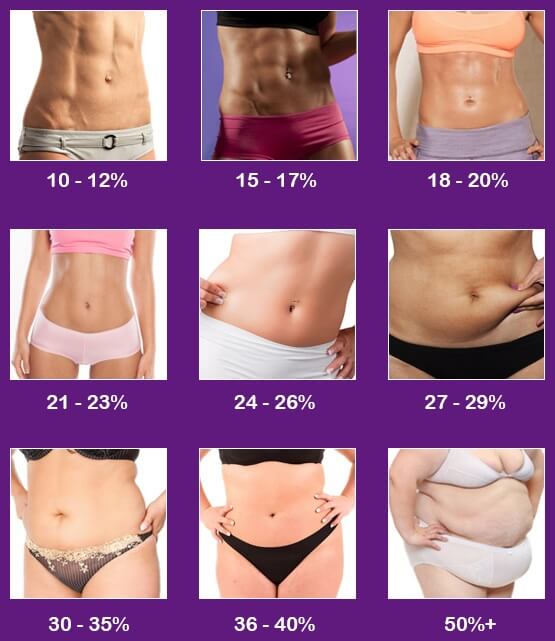
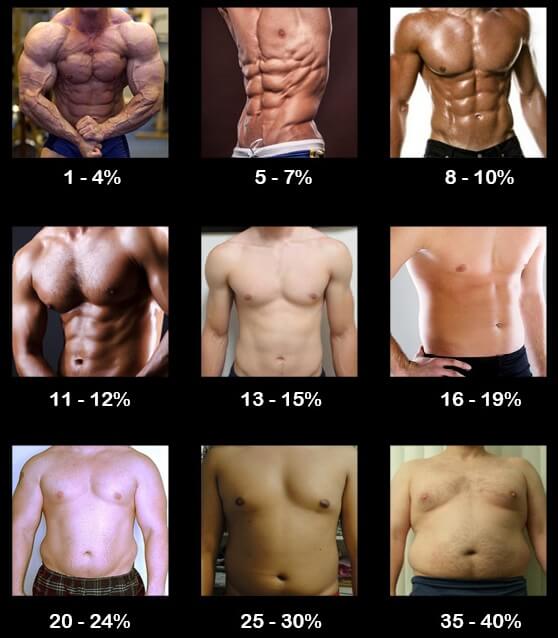
Well, the rule of thumb is the abs really start to become visible at 10% body fat and under in men and 20% and under in women. And the “shredded” look starts at ~7% and under in men and ~15% and under in women.

If you’re not familiar with how various body fat percentages look, these images will help:
Top Seven Lies Fitness Magazines Love To Tell

Top Seven Lies Fitness Magazines Love To Tell

So, step one is get lean and you’ll have abs. But not necessarily great abs, which is where building your core comes in. And, like most things health and fitness, this is made to seem much more complicated than it actually is.

There are an almost endless variety of ab exercises and far too many opinions on what’s better than what. Fortunately, however, you only need to focus on a handful of to fully develop your core. 

Fitness Magazine Lie #2:

Here’s How So-and-So Got Ripped for Their Movie



Evans in Captain America, Cavill in Man of Steel, Hemsworth in Thor, Jackman in X-Men, Pitt in Troy, Bale in Batman, Butler in 300.

Ever year some new stud pops up on the silver screen with a body that makes the gals swoon and the guys re-up their gym memberships. And the magazines have a field day.

Covers get Photoshopped, workouts that the stars didn’t do get invented, and supplements they didn’t take get hawked.

Well, let’s cut the bullshit and get right the point: when you hear of a guy gaining 30 pounds of muscle in 4 months, the first thing you should suspect is steroids.

I know, I know…people love to cry steroids when they see someone in better shape than them, but hear me out.

Research shows that a guy new to weightlifting can expect to gain anywhere from 15 to 20 pounds of muscle in his first year of weightlifting. (And for women, cut those numbers in half.)

And that’s assuming he’s/she’s following a well-designed training program and diet. Anything less will deliver less results.

The same research shows that in year two, he can expect about half of the year one gains (8 to 10 pounds in men and half in women). Year three, half again. And from year four on out, anywhere from 2 to 5 pounds per year.

Yes, natural muscle growth really does take that long.

That’s why it usually takes 3 to 5 years for guys and gals to gain the 35 to 45/15 to 20 pounds of muscle required to naturally transform their physiques from “normal” to “fitness model.”

Now, how do these projections change when steroids are added to the picture?

Well, let’s first look at an extensive review of anabolic steroid use conducted by scientists at Maastricht University. They found that experienced weightlifters using anabolic steroids were able to gain between 4.5 and 11 pounds of muscle in less than ten weeks. The largest amount of muscle growth they saw was 15.5 pounds over 6 weeks of steroid-fueled weightlifting.

Those are some pretty outrageous numbers that could never be replicated naturally.

Another study that lends insight to the power of steroids was a case study conducted with an elite bodybuilder. Researchers followed him for a year, and he used steroids for all but 4 weeks of the 12-month period. By the end of the year, he had gained about 15 pounds of muscle, or about triple the amount that he should have been able to gain naturally.

So, now that you know how much steroid use affects muscle growth, let’s get back to actors training for movie roles.

The most obvious red flag is the how quickly they get fit and how dramatically their bodies change.

It’s common to hear about so-and-so going from a dad bod to gaining 20+ pounds of muscle in a few months while staying lean, or even reducing body fat.

Some of these guys have muscle memory on their side but that’s just not enough to put up results like that. You can bet that drugs were involved.

Now, did the guys I named earlier do this? I don’t know. But I don’t know why they wouldn’t have. Think about it for a second.

Most actors aren’t gym rats that stay jacked throughout the year and they have some really good reasons to use steroids to secure a role.

Millions of dollars and, often, a career jump are on the line, results are needed very quickly, and world-class bodybuilding coaches and doctors are available to ensure everything is done properly.

Hell, who can blame them really? Can you really say you wouldn’t do the same thing if you were in the same position?

So, my point here isn’t to call out anyone in particular or even speak badly of Hollywood folk that use steroids to prep for movies. I could care less what people do with their bodies.

It’s unfortunate, however, that their transformations are used to sell people on diets and workout routines that simply won’t work without the drugs.

When you hear that so-and-so lifted weights for 2+ hours per day, 7 days per week, and then did conditioning work on top of that…and ate thousands of calories per day…and came out bigger, leaner, and stronger than ever in just 3 months…just know what you’re looking at.
Fitness Magazine Lie #3:

This Supplement Changes Everything

Top Seven Lies Fitness Magazines Love To Tell

Let’s start out by making something abundantly clear:

There is no single supplement that is going to make a dramatic difference in your training, muscle growth, or fat loss.

A combination of the right supplementscan help you reach your goals faster, but you can get there smart dieting and training alone.

The truth is most workout supplements are completely bogus and can’t deliver a fraction of the results they promise. They are, for a lack of better terms, worthless crap.

Oh can they make money, though. A lot of freaking money. And as you know, magazines have a big stake in those numbers growing.

Well, don’t buy into it. Here are the most common types of supplement bullshit:Anything other than creatine that is claimed to directly help you build muscle and strength…
Anything that is claimed to rapidly increase fat loss…
Anything that claims to naturally boost your testosterone levels…

…is bullshit.

If you’d like to know more about which supplements work and which don’t, and about supplementation in general, check this out.

Fitness Magazine Lie #4:

Cardio is a Great “Fat Loss Workout”

Top Seven Lies Fitness Magazines Love To Tell

Every morning I see the same crowd of overweight people grinding away and gushing sweat on the treadmill, StairMaster, and elliptical machines, which I imagine they’ve reserved and named by now.

And these guys and gals are just as fat as they ever were. Some are even fatter than when they started, which begs the question of what they think is going to change.

Well, they’re just stuck following decades of bad weight loss advice centered around doing long hours of cardio, which has produced millions of overtrained, overweight, underfit people addicted to burning calories instead of getting fit.

This isn’t just my opinion, either. Researchshows that just doing regular cardio guarantees little in the way of fat loss and many people wind up even fatter than when they began their exercise routines.

There are several reasons why cardio isn’t all that great for losing fat.
It’s too easy to eat the calories you burn.

You have to work damn hard just to burn a few hundred calories in a cardio workout…and it’s really damn easy to eat them all back without even realizing it. A couple handfuls of nuts and some fruit is all it takes.

The energy you burn during cardio does support your weight loss efforts, of course, but your goal isn’t to just burn calories, it’s to lose fat. And if you’re eating too much, no amount of cardio is going to get you leaner.
Your body adapts to the exercise to reduce caloric expenditure.

If someone at least halfway informed stops losing weight, she will rightly suspect the problem is overeating.

What she probably won’t suspect, though, is the adaptive aspect of exercise.

Research shows that the more frequently you do a certain type of activity, the more your body adapts to increase energy efficiency. This means that, as time goes on, less and less energy is needed to continue doing it.

This can throw people for a loop because it leads them to believe they’re burning more calories doing cardio than they actually are.

This, then leads them to eat too much food, fail to lose weight, and then wonder what the hell is wrong. Metabolic “damage”? Thyroid problems? Genetic curse?

Many people stuck in this quandary refuse to give up, though, and do the only thing they know: more cardio. This “fight fire with fire” approach does increase overall caloric expenditure but also accelerates metabolic slowdown and brings various health risks into play.

The right way to look at cardio and weight loss is this:

The less cardio you can do while still reaching your body composition goals, the better.

Cardio doesn’t preserve muscle, which is just as important as losing fat.
Top Seven Lies Fitness Magazines Love To Tell

We say we want to lose weight but what we really want is to lose fat.

This isn’t pedantry.

Losing weight includes losing muscle,which is what you can expect when you restrict your calories and do a lot of cardio, and which is what causes the “skinny fat” look.

The key here is including resistance training in your regimen, which speeds up fat loss and helps minimize muscle loss. In fact, when you’re dieting for fat loss, I recommend that you do 2 to 3 times as much resistance training as cardio.

The Bottom Line on Cardio Workouts and Weight Loss

Cardio can help you lose fat faster but it just doesn’t deserve all the attention it gets.

I’ve already mentioned that I do no more than a couple hours of cardio per week when cutting, and here’s how I go about it.

Fitness Magazine Lie #5:

You Have to “Eat Clean” to Get Fit
Top Seven Lies Fitness Magazines Love To Tell

The cult of “clean eating” is more popular than ever these days. And while it has its heart in the right place, it really misses the forest for the trees.

What most “clean eaters” don’t realize is the nutritional value of food has little to do with its effect on your body composition.

There’s no questioning that you need to eat plenty of nutritious foods to stay healthy, but there are no foods that directly cause weight loss or weight gain.

Sugar isn’t your enemy and “healthy fats” aren’t your savior.

The key to understanding these “blasphemous” statements is understanding the concept of “energy balance,” which is the relationship between the amount of energy you eat and the amount you burn.

The immutable reality is meaningful weight loss requires eating less energy than you expend and meaningful weight gain requires the opposite (eating more than you burn).

You see, when you eat less energy than you burn, you’re in what’s known as a “negative energy balance” or “calorie deficit.” This results in weight loss. And when you eat more than you burn, you’re in a “positive energy balance” or “calorie surplus.” This results in weight gain.

Thus, in this sense, a calorie is a calorie.

Eat too many calories of the “cleanest” foods in the world and you will gain weight. Maintain a calorie deficit while following a “gas station diet” of the most nutritionally bankrupt crap you can find and you will lose weight.

This is why Professor Mark Haub was able to lose 27 pounds on a diet of protein shakes, Twinkies, Doritos, Oreos, and Little Debbie snacks. He simply ate fewer crappy calories than his body burned and, as the first law of thermodynamics dictates, this resulted in a reduction in total fat mass.

Fitness Magazine Lie #6:

Low-Carb Dieting is the Way of the Future



Top Seven Lies Fitness Magazines Love To Tell

Dietary demagogues are leveling some pretty serious charges against the carbohydrate these days.

If we’re to buy into the hysteria, carbs make us fat, braindead, and diseased, and the sooner we forsake them, the better our chances for vitality, happiness, and longevity.

Well, that’s a bunch of hooey.

Unless you’re overweight and sedentary, carbohydrates aren’t the enemy. They don’t make you fat or unhealthy.

In fact, carbs are vitally important for building muscle and reducing your intake doesn’t help you lose fat faster.

Let’s first look at how eating carbs helps you build muscle.

How Carbs Help You Build Muscle
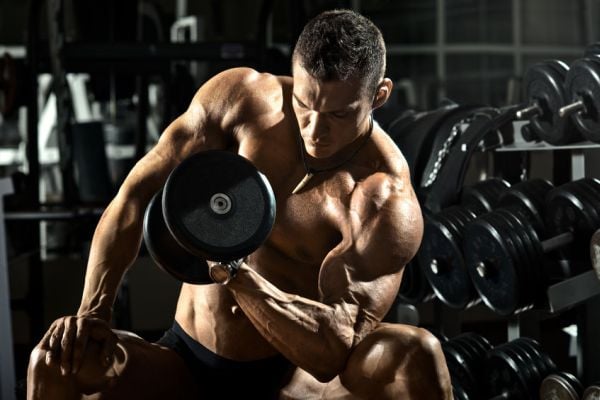


When you eat carbs, one of the substances they are broken down into is glycogen, which is a form of potential energy stored in the liver and muscles.

Resistance training is an anaerobic activity, which means it pulls heavily on muscle glycogen stores.

When your muscles are full of glycogen, which requires a rather high carb intake, they perform better and sustain less damage during training.

And when we look at the bigger picture of muscle growth, the importance of these benefits becomes clear.

The harder you can push your muscles in your workouts, the better you can progressively overload them over time…which increases muscle growth. And the less exercise-induced protein degradation there is, the greater the gap there will be between protein synthesis and breakdown rates…which increases muscle gain.

Another muscle-building benefit of a high-carb diet relates to insulin production.

Carb haters will tell you that the insulin “spike” that occurs when you eat carbs is one of the biggest reasons they’re so bad for you, but this is laughable.

First, insulin’s job is to shuttle nutrients from your blood into your cells. It’s vitally important and nothing to be afraid of.

Second, low-carb advocates usually extol the virtues high-protein dieting, which I agree with, but most forms of protein “spike” insulin production just as carbs do. For example, whey protein is more insulinogenic than white bread and eating beef causes just as much insulin to be released as brown rice.

They can’t have it both ways. You can’t say the insulin spike that occurs when you eat carbs is worse than the almost identical spike that occurs when you eat protein.

Now, what does all this have to do with building muscle?

Well, insulin doesn’t directly stimulate muscle growth like amino acids do, but it is anti-catabolic, which means it slows down the rate at which muscle proteins are broken down.

This affects muscle growth because, as mentioned earlier, anything that suppresses muscle protein breakdown rates is going to affect the “bottom line” of muscle proteins gained vs. lost is going to, over time, affect total lean mass gained or lost.

That’s not just theory, either. There are several studies that conclusively show that high-carbohydrate diets are superior to low-carbohydrate varieties for building muscle and strength.

Researchers at Ball State University found that low muscle glycogen levels (which is inevitable with low-carbohydrate dieting) impair post-workout cell signaling related to muscle growth.

A study conducted by researchers at the University of North Carolina found that when combined with daily exercise, a low-carbohydrate diet increased resting cortisol levels and decreased free testosterone levels.

(Cortisol, by the way, is a hormone that breaks tissues, including muscle, down. It’s also inversely correlated with testosterone, meaning that someone with chronically high cortisol levels is going to have chronically low levels of testosterone, which isn’t ideal for building muscle.)

These studies help explain the findings of other research on low-carbohydrate dieting.

For example, a study conducted by researchers at the University of Rhode Island looked at how low- and high-carbohydrate intakes affected exercise-induced muscle damage, strength recovery, and whole body protein metabolism after a strenuous workout.

The result was the subjects on the low-carbohydrate diet (which wasn’t all that low, actually—about 226 grams per day, versus 353 grams per day for the high-carbohydrate group) lost more strength, recovered slower, and showed lower levels of protein synthesis.

In this study, researchers at McMaster University compared high- and low-carbohydrate dieting with subjects performing daily leg workouts. They found that those on the low-carbohydrate diet experienced higher rates of protein breakdown and lower rates of protein synthesis, resulting in less overall muscle growth than their higher-carbohydrate counterparts.

All this is why I never drop my carbohydrate intake lower than about .8 grams per pound of body weight when cutting (and yes I get to 6% body fat eating this many carbs per day), and I’ll go as high as 2 to 2.5 grams per pound when bulking.

Why a Low-Carb Diet Isn’t Better for Losing Fat


That statement is fitness sacrilege these days, but the widely popular advice to go on a low-carb diet to maximize fat loss is scientifically bankrupt.

There are about 20 studies that low-carb proponents bandy about as definitive proof of the superiority of low-carb dieting for weight loss. This, this, and this are common examples. If you simply read the abstracts of these studies, low-carb dieting definitely seems more effective, and this type of glib “research” is what most low-carbers base their beliefs on.

But there’s a big problem with many of these studies, and it has to do with protein intake.

The problem is the low-carb diets in these studies invariably contained more protein than the low-fat diets. Yes, one for one…without fail.

What we’re actually looking at in these studies is a high-protein, low-carbohydrate diet vs. low-protein, high-fat diet, and the former wins every time. But we can’t ignore the high-protein part and say it’s more effective because of the low-carb element.

In fact, better designed and executed studies prove the opposite: that when protein intake is high, low-carb dieting offers no especial weight loss benefits.

But we’ll get to that in a minute.

Why is protein intake so important, exactly? Because adequate protein intake while dieting for fat loss is vital for preserving lean mass, both with sedentary people and especially with athletes.

If you don’t eat enough protein when dieting to lose weight, you can lose quite a bit of muscle, and this in turn hampers your weight loss in several ways:

1. It causes your basal metabolic rate to drop.

2. It reduces the amount of calories you burn in your workouts.

3. It impairs the metabolism of glucose and lipids.

As you can see, when you want to lose fat, your number one goal to preserve lean mass.

Now, let’s turn our attention back to the “low-carb dieting is better” studies mentioned earlier. In many cases, the low-fat groups were given less protein than even the RDI of .8 grams per kg of body weight, which is just woefully inadequate for weight loss purposes. Research has shown that even double and triple those (RDI) levels of protein intake isn’t enough to fully prevent the loss of lean mass while restricting calories for fat loss.

So, what happens in terms of weight loss when you keep protein intake high and compare high and low levels of carbohydrate intake? Is there even any research available to show us?

Yup.

There are four studies I know of that meet these criteria and gee whiz look at that…when protein intake is high and matched among low-carb and high-carb dieters, there is no significant difference in weight loss.

The bottom line is so long as you maintain a proper calorie deficit and keep your protein intake high, you’re going to maximize fat loss while preserving as much lean mass as possible. Going low-carb as well won’t help you lose more weight.

Fitness Magazine Lie #7:

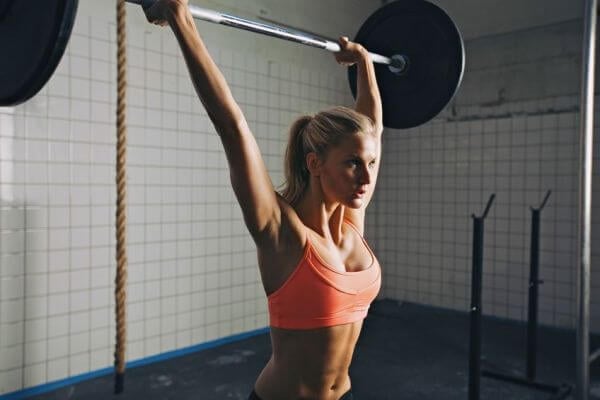
Women Shouldn’t Lift Heavy Weights
Top Seven Lies Fitness Magazines Love To Tell

If there’s one lie that causes more harm to women’s physiques than any other, it’s the warning that heavy weightlifting makes you “bulky.”

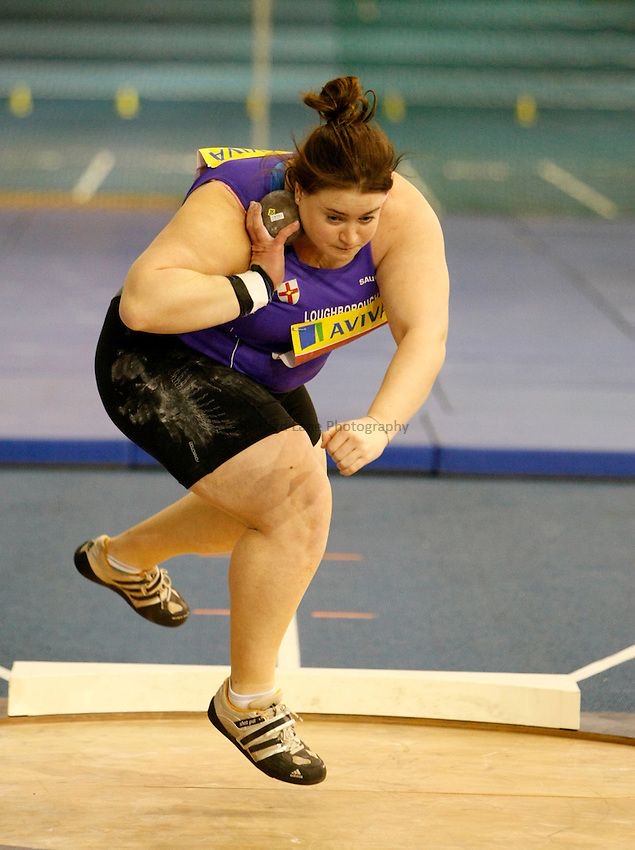
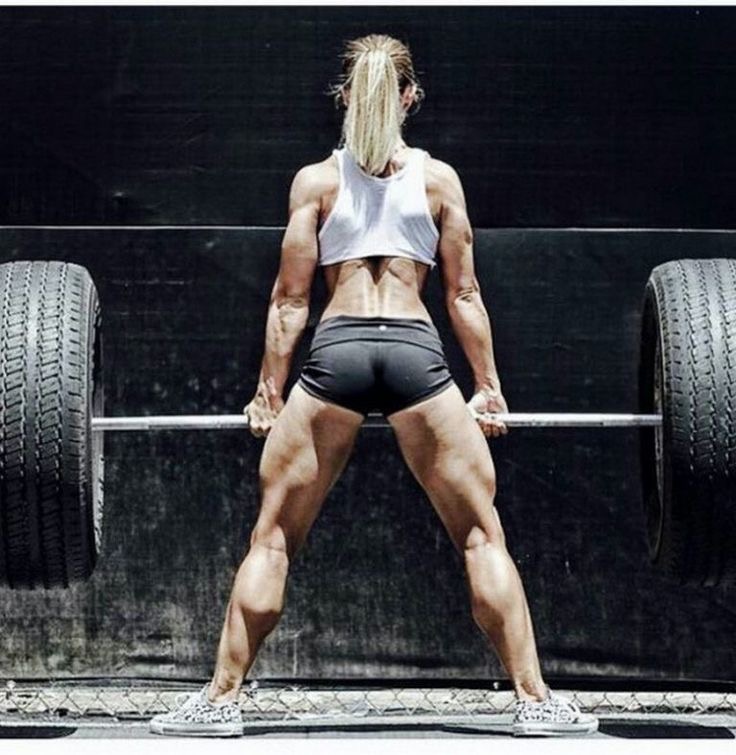
At first glance, it sounds plausible. Heavy weights are for the boys that want bulging biceps, right? Why would women, who want long, lean, “toned” muscles, train in the same way? Apparent proof of this myth can be found at any local CrossFit box, where you’ll see at least a few women with builds that would make a linebacker jealous.

Well, the first thing you should know it’s very hard for women to build a big, bulky body. It doesn’t happen by accident or overnight. It takes years of intense training and eating to look like a dyed-in-the-wool weightlifter.

Trust me–even if you wanted to get big, bulky muscles, you’d have a hell of a time actually doing it. Men have about 10 to 15 times as much testosterone as women and even we have trouble getting big and bulky. That means it’s damn near impossible for you.

This heavy weightlifting fallacy is so detrimental because heavy weightlifting is actually the only way to get the look most women are after: athletic, tight muscles with curves and lines in the right places.

If this is your goal, you’re going to have to build muscle, and heavy weightlifting is great for doing just that.

The key to building muscle and not “bulk,” however, is staying lean. The more muscle you have, the more you have to pay attention to your body fat percentage.

Take an athletic woman with an enviable body. You know, shapely legs, curvy butt, tight arms, and flat stomach. Add 15 pounds of fat to her frame, however, and you might be surprised how “blocky” she looks.

This is because fat accumulates inside and on top of muscles, and the more you have of both, the larger and more amorphous your body looks. Your legs turn into logs. Your butt gets too big for your britches. Your arms fill up like sausages.

Reduce your body fat levels, however, and everything changes–the muscle you’ve built is able to shine. Instead of looking flabby and malnourished, you look lean and toned. Your butt is round and perky. Your legs have sleek curves. Your arms look defined.

What types of body fat percentages am I talking about, you’re wondering?

If you want that lean, defined, athletic look, you’re going to need to maintain a body fat percentage between 15 and 20%.

I’ve worked with thousands of women and the “sweet spot” for most seems to be around 17 to 18%. This is where they can lift weights and build muscle and look both feminine and fit, and it isn’t so low that health or lifestyle is impaired.

The Bottom Line on Fitness Magazines

I could go on for another 10,000 words but I think I’ll end the assault here. I think I’ve made my point–much of what you read in magazines is just nonsense.

That said, fitness magazines aren’t all bad. Everything has its positives. I mean, even the demonic Third Reich gave us Volkswagon, Hugo Boss, the autobahn, and Wernher von Braun.

Just kidding.

To be fair, magazines do keep many people motivated to keep working out and inspire many more to pursue healthier lifestyles, but they should be viewed accordingly. Think dalliance, not dependency.
What do you think about fitness magazines? Have anything else to share? Let me know in the comments below!
Posted by ICYM on December 05, 2022 No comments:
Email ThisBlogThis!Share to XShare to FacebookShare to Pinterest
Labels: Creativity, Fitness and Health, Lifestyle Fitness, News, Nutrition, Sports, Tips

Sunday, March 13, 2022

Top 6 Boxing Basics That'll Make You Feel Like a Total Badass

6 Boxing Basics That'll Make You Feel Like a Total Badass


Top 6 Boxing Basics

Share on Pinterest

Boxing may look intimidating, but it doesn’t have to feel that way. Arming yourself with a few basic moves before your first boxing class or training session will set you up for success in the ring.

“At any level, it’s always beneficial to brush up on the fundamentals,” says Tatiana Firpo, group fitness instructor at EverybodyFights.

“Plus, it’s fun! When you learn correct technique and train to understand boxing, there are endless possibilities of progress, and it’s a great feeling of accomplishment,” she says.

Before you get started, brush up on your stance and breathing technique then master the 6 basic moves below.
Top 6 Boxing Basics


Boxing stance

Start standing with feet shoulder-width apart.

If you’re right-handed, take one step back with your right foot. Left-handers, do the opposite. The lead toe should be in line with the rear heel.

Turn lead shoulder to opponent or bag. Bend knees slightly for agility.

This stagger stance helps you maintain balance. It also allows you to use your hips for power when throwing a punch.

In a real match, this stance also makes you a smaller target for your opponent, giving them less area to connect a hit. To protect your face, tuck chin and place gloves up to cheekbones.

Boxing Breath

Inhale to prepare for a punch. As you throw, exhale fast through your mouth (versus your nose) with a closed jaw. This should sound like a hiss.

In a real match, you could risk breaking the jaw if your mouth is open and you take a hit to the chin. The purpose of this sharp exhale is to engage the core and connect the punch to your body.

This breath work helps with both timing and power. Even if you’d never end up in a real fight, you’ll still look and sound like a pro.

Basic boxing moves


1. Jab

Share on Pinterest

Start in boxing stance. As fast as possible, extend front arm straight out as you step forward with front foot. Your front hand and front foot should connect simultaneously.

Pull glove back to face as fast as possible to reset. The jab, usually referred to as “1,” is your quickest punch and uses the least amount of energy.

2. Cross

Share on Pinterest

Start in a boxing stance. Step front foot forward as you rotate at the hips, pivot rear foot forward, and extend rear arm straight out. Don’t cock arm back. Also remember to keep weight evenly distributed through both legs.

Pull your fist back to face as quickly as possible to reset. The cross, usually referred to as “2” is your power punch, since you can throw your whole body into it.

3. Hook

Share on Pinterest

Start in a boxing stance. Lift your front elbow to be parallel with the floor, like you’re stirring a pot. Pivot on front foot to turn knee and roll hip over for more power. Rotate everything at the same time to connect.

Keep arm at a 90-degree bend and don’t extend through the punch. Repeat on the opposite side for rear hook. The hook — lead is “3” and rear is “4” — is a short range punch, so always keep opposite hand up to your face to guard.

4. Uppercut

Share on Pinterest

Start in boxing stance. On lead side, drop shoulder (like a side crunch) and load legs by bending at the knees slightly.

Keep your arm bent and throw a punch from the ground up as you turn your hip and pivot your foot. Don’t curl your arm. The power won’t come from biceps; it comes from the legs. Pull fist back to face as quickly as possible to reset.

Like the hook, the uppercut — lead is “5,” rear is “6” — is a short-range shot, so don’t reach for it and end up with your knuckles in the air Mortal Combat-style. Keep the opposite fist at your face for protection.

Basic defensive boxing techniques

5. Slip

Share on Pinterest

Start in boxing stance with fists up to guard. If opponent throws toward your right side, rotate from waist to left, drop left shoulder, bend knees, and crunch to left to slip outside the line of opponent’s shot.

Repeat on right side if opponent throws to left. Slipping is a defensive boxing technique and puts you in a position to counter as you rise back up to starting stance.

6. Duck

Share on Pinterest

Start in boxing stance. As opponent throws a shot (like a hook), send hips back and bend knees (like a squat), then shift your body weight from one leg to the other as you rise back up.

Like slipping, ducking is a defensive technique. Unlike slipping, you’re ducking under the shot and rising up on the other side to throw a counter.

Special thanks to Gotham Gym NYC and our model, Tatiana Firpo, for demo-ing the boxing moves.

Share...
Posted by ICYM on March 13, 2022 No comments:
Email ThisBlogThis!Share to XShare to FacebookShare to Pinterest
Labels: Creativity, Fitness, Fitness and Health, Lifestyle Fitness, Sports

Tuesday, February 08, 2022

Top 12 Boxing-Inspired Core Exercises for Rock-Solid Abs


Top 12 Boxing-Inspired Core Exercises for Rock-Solid Abs


You might find it surprising that boxing is one of the most complete, full-body workouts you can do. Your aerobic, anaerobic, and nervous system have to work together, and as a result, your musculature and mental sharpness, or reaction time, improves, explains Noah Neiman, cofounder and head trainer at Rumble Boxing in New York City.

“A common misconception most people have is that launch power for a punch comes from strong arms,” he says. “But it’s actually the ability to generate power from your legs, from the speed and power of rotation through your hips and core, and then ultimately the extension of your arms that creates a strong punch.”

Translation: Core strength is integral to generating the force necessary for boxing (whether you’re a casual kickboxer or a serious competitor). And a strong core isn’t just beneficial in the ring; it’s important outside of it too. “Poor core strength can lead to back, lower back, neck, and even knee pain,” Neiman says. So to keep you in top shape on and off the ropes, we collected 12 abs exercises borrowed from boxers that’ll help you build serious core strength.

How to use this list: Start by performing each exercise below for 30 seconds. Use the modifications or progressions listed, if applicable, to better suit your personal strength. Build up to 60 seconds each. Perform each move with no rest in between for a killer 12-minute workout or scroll down to try our 12-minute, 4-move sample workout below. You can substitute any exercise in this list for another in the workout. Grab an exercise mat to get started.

Inchworm Push-Up


Share on Pinterest

Stand with feet shoulder-width apart. Hinge at hips to bend over and touch floor with hands, then walk hands out to high plank position. Keeping elbows close to sides, bend elbows and lower chest to floor. Push back up, then walk hands back toward feet. Repeat. Make it easier: Drop to knees for the push-up then return to plank.

Sit-Up With One-Two Punch


Share on Pinterest

Lie faceup on mat, knees bent, feet flat on the floor in front of you. Keeping feet planted, engage core and use abdominal muscles to sit up while keeping hands in fists in guard in front of face. At the top, throw a right and left punch, then slowly lower back down one vertebrae at a time to return to starting position. Repeat. Make it harder: Add 16-ounce gloves or a light set of hand weights.

Walking Plank


Share on Pinterest

Start in high plank position, hands directly under shoulders, legs extended out behind you, core engaged to keep body in straight line from head to toe. Lift up right hand and lower right forearm to the floor. Do the same with left hand and forearm. Then lift right forearm and place right hand back on ground, followed by the left hand. Continue repeating. Make it harder: Place a BOSU ball underneath your forearms to challenge your stability.

V-Up


Share on Pinterest

Lie faceup on mat, legs extended straight, arms extended overhead. Keeping core engaged, sit up, lifting arms and legs simultaneously toward each other, so body forms a V shape. Slowly lower back down until arms and legs are two inches above ground. Repeat.

Plank Jack


Share on Pinterest

Start in a forearm plank, elbows directly under shoulders, core engaged so body forms a straight line from head to toe. Without moving upper body, jump feet apart, then back together. Continue jumping.Make it harder: Increase your speed.

Sprinter Crunch

Share on Pinterest

Lie faceup on mat, legs extended out in front of you, hands up in guard. Keeping core tight, sit up and twist toward left while simultaneously bringing left knee to right elbow. Lower back down to starting position. Repeat on other side. Continue alternating.

Straight Leg Scissor

Share on Pinterest

Sit on mat, legs extended straight out in front of you. Lean torso back and place fingertips on floor next to hips for support. Keeping legs straight NS core engaged, lift right leg toward ceiling. Lower, then lift left leg toward ceiling. Continue alternating. Make it harder: Add ankle weights.

Push-Up to Superman

Share on Pinterest

Start in high plank position, hands slightly wider than shoulder-width apart, body in straight line from head to toe. Bend at elbows to lower chest to floor to perform a push-up. Release hands, pull shoulder blades together, and lift chest, arms, and legs off mat. Lower down, place hands on ground, and push back up to plank position. Repeat.

Russian Twist


Share on Pinterest

Sit on mat with knees bent, feet on floor in front of you about hip-width apart. Engage core, lean back about 45 degrees, and bring fists up to chest with elbows out. Twist at waist to tap right elbow to the mat on right side, then left elbow to mat on left side. Continue alternating. Make it harder: Grab a medicine ball or kettlebell in the weight of your choice and hold at chest.

Shoulder Tap


Share on Pinterest

Start in high plank position, hands directly under shoulders, body in straight line from head to toe. Without shifting weight and keeping body still, lift right hand and tap left shoulder, then lift left hand and tap right shoulder. Continue alternating as fast as possible.

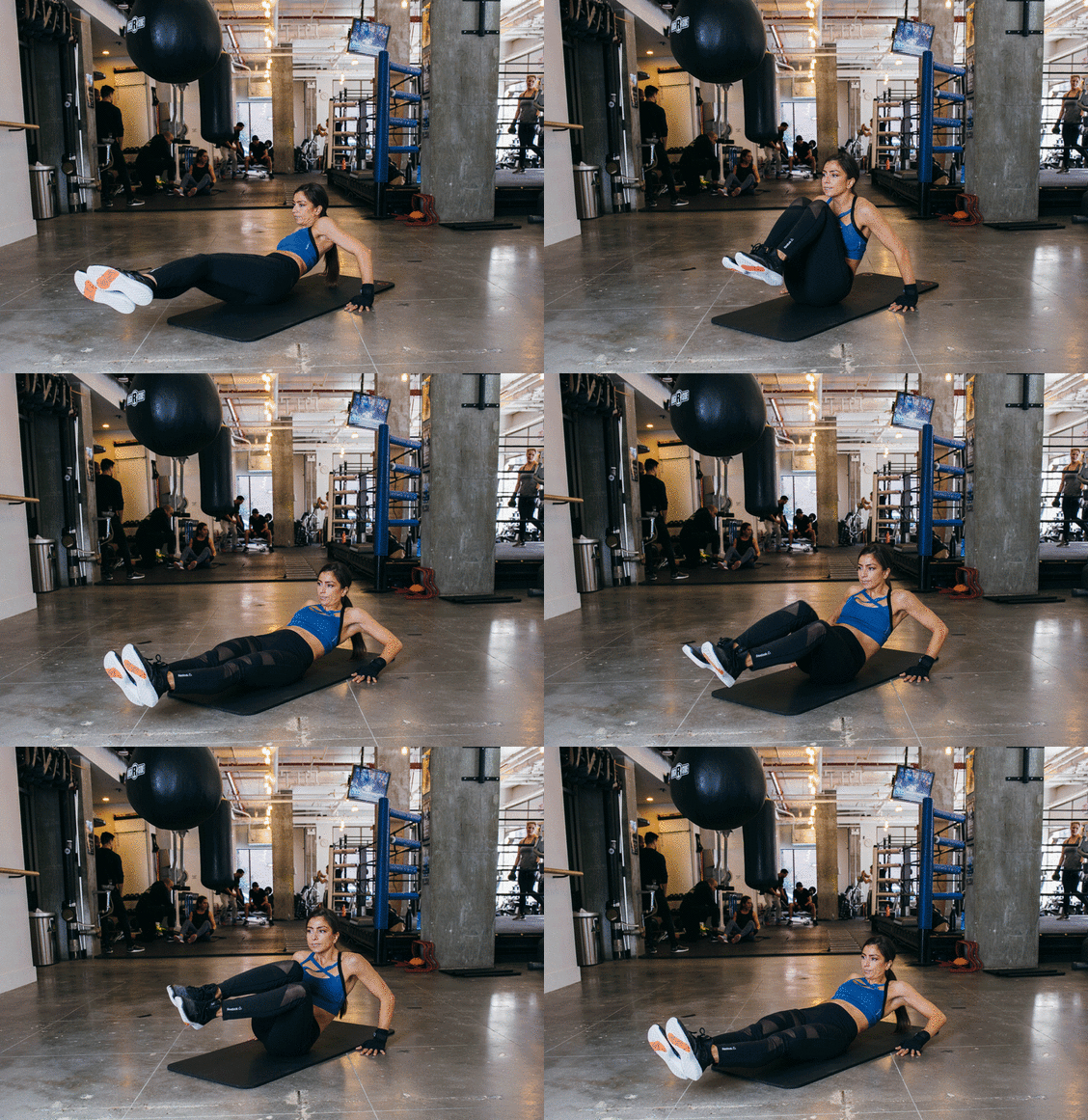
Reverse Oblique Crunch


Share on Pinterest

Start sitting on mat, legs extended out in front of you, hands on mat behind you. Lean back slightly onto fingertips for balance and lift legs two inches off floor. Keeping core tight, twist at the waist and bring bent knees toward chest, then extend back out (don’t drop legs to mat). Twist to the other side and repeat. Continue alternating.

Sit-Up to Stand Up


Share on Pinterest

EDITOR’S PICK This is a classic Mayweather move that’ll challenge your entire body. Grab a partner (or just use the base of a couch, dresser, or heavy object to lock down your feet). Start lying faceup on mat, knees bent, feet flat on the floor in front of you with partner anchoring feet. Engage core, perform a sit-up, and continue to come all the way up to standing, reaching arms overhead. Slowly reverse the movement back down to return to starting position. Repeat. Make it harder: Add a set of dumbbells.


Share on Pinterest

Photography: Julia Hembree

Special thanks to Gotham Gym NYC and our model, Tatiana Firpo, Gotham group fitness manager and trainer.
Posted by ICYM on February 08, 2022 No comments:
Email ThisBlogThis!Share to XShare to FacebookShare to Pinterest
Labels: Creativity, Fitness and Health, Lifestyle Fitness, Sports

Friday, November 26, 2021

Top 8 Relaxing Poses That Offer Relief

How To Workout With Sciatica Using These 8 Relaxing Poses That Offer Relief


8 Relaxing Poses That Offer Relief


Are you dealing with shooting pains or numbness from sciatica? Discomfort is caused when the sciatic nerve (which runs from the lower spine down the back of each leg) gets pinched. It can be caused by an injury such as a slipped disk or pelvic fracture, pregnancy, or tight muscles in the lower back, hips, and legs.

Whatever the cause, sciatica can be extremely uncomfortable, resulting in weakness, numbness, tingling, and burning, as well as moderate to extreme pain. With nerve injuries, you want to be careful not to irritate the nerve more than it already is, and the same is true with sciatica.

Whether you feel yours at night or after sitting or standing for a long time, relief is just a yoga mat away with these eight poses. The goal is a gentle movement that doesn’t overstretch the nerve.

1. Half Moon

If your sciatica symptoms are caused by sitting or standing for long periods, stretching the outer leg can offer instant relief.

Top 8 Relaxing Poses That Offer Relief


How to:
Stand on your hands and feet in Downward Facing Dog.
Step your right foot forward between your hands, and rise up into Warrior 1.
Open your hips, arms, and chest into Warrior 2.
Place your left hand on your left hip, and stretch your right arm straight out, creating length through the right side of your body.
Shift weight onto your right foot, and lift your left foot up.
Plant your right palm flat on the ground under your shoulder.
Distribute your weight evenly between your right hand and foot.
Lift your left arm up, and gaze toward your left hand.
Hold for five breaths, and then release the pose, coming into Downward Dog.
Then try Half Moon on the left side.

 2. Seated Spinal Twist

Creating some movement in the spine through twisting poses can relieve pressure from the sciatic nerve. As a bonus, this pose also targets the oh-so-tight piriformis muscle.

Top 8 Relaxing Poses That Offer Relief


How to:
Begin seated on your mat with your legs extended in front of you.
Bend both knees and place your left heel as close to your right sit bone as you can.
Cross your right foot over your left knee and plant it on the floor so your outer right ankle is next to your left knee.
Reach your right arm behind you, and place your palm on the floor.
Cross your left elbow over your outer right thigh to gently increase the twist.
Gaze behind you and over your right shoulder, staying here for five breaths.
Then release the twist, straighten your legs out in front of you, and do this pose with your left knee pointing up.

3. Open Lizard

This variation of Lizard pose will open a different part of your hip, as well as offer a nice stretch for the hip flexor, which can also contribute to sciatica discomfort.

Top 8 Relaxing Poses That Offer Relief


How to:
From Downward Facing Dog, step your right foot forward between your palms.
Keep your hands on the mat, and lower your left knee to the floor, pointing the toes.
Slowly lower your right knee to the right, so you’re resting on the outside of your right flexed foot.
Keep your arms straight, pressing your chest forward just like in Upward Facing Dog.
This will help encourage your hips to lower, increasing the stretch.
Gaze forward, and enjoy this pose for five breaths.
Then switch sides.

4. Locust

Strengthening the back muscles can offer relief, and here’s an effective and relaxing pose to try.

Top 8 Relaxing Poses That Offer Relief


How to:
Lie on your belly with your legs together.
Place your arms by your sides so your palms are facing up.
As you inhale, lift your legs, head, and upper body off the floor.
Keep your hands on the floor for support.
As you breathe, extend the crown of your head away from your toes, lengthening as much as you can through your spine.
Stay for five breaths, and then release back to the mat.

5. Pigeon

Take this pose as deeply as you want to target the areas of discomfort around your lower back, hips, and thighs.

Top 8 Relaxing Poses That Offer Relief


How to:
From Downward Facing Dog, step both feet together, and bring your right knee forward between your hands so your outer right leg is resting on the mat.
If your hips are more open, inch your right foot away from you.
Make sure your left hip is always pointing down toward the mat.
Stay here with your hands resting on your hips or your right leg, or walk your hands out in front of you, allowing your torso to rest over your right knee.
Hold here, breathing into any areas of tightness and tension, for at least five breaths.
Then place your hands on the mat in front of you, tuck your left toes, and step your right foot back.
Repeat Pigeon
on the left side.

6. Figure Four

This relaxing variation of Pigeon really targets the tight piriformis muscle, which is a common cause of sciatica.

Top 8 Relaxing Poses That Offer Relief


How to:
Lie on your back with both legs in the air.
Place your right ankle on your left thigh above your knee.
See the shape of the number four? It is there, just upside down.
Reach your right hand through the open space created by your right leg and grab your left hand, which is reaching around the outside of your left thigh.
Slowly bend your left knee toward your chest.
You should feel a stretch on the outside of your right hip.
After five breaths repeat on the other side.

7. Reclining Big Toe Pose

This gentle variation of Reclining Big Toe pose is done with a bent knee so you can really focus on stretching the lower back and hamstring of the leg that’s raised.

Top 8 Relaxing Poses That Offer Relief


How to:
Lying on your back, bend your left knee slightly and plant your foot on the floor.
Raise your right leg into the air, keeping your pelvis grounded.
Hold your lower thigh or place a strap over the arch of your foot.
Keep your torso relaxed, and hold for five breaths.
Repeat on the left side.

8. Half Wheel

Some people will experience relief from engaging the glutes and hamstrings, so give this back bend a go.

Top 8 Relaxing Poses That Offer Relief

How to:
Begin lying flat on your back with your arms along the sides of your body and your palms facing down.
Bend your knees, placing your heels as close as you can to your bum.
With your palms and feet pressing firmly into the ground, lift your hips up.
Keep your palms on the mat or clasp your hands together below your pelvis, extending through your arms.
Or you can also bend your elbows and rest your hands on your lower back.
If your feet are close enough, you can also hold your ankles.
Stay here for five deep breaths, lifting your hips up as high as you can.


Sharing is caring...
Posted by ICYM on November 26, 2021 No comments:
Email ThisBlogThis!Share to XShare to FacebookShare to Pinterest
Labels: Fitness, Fitness and Health, Lifestyle Fitness, Medical Disclaimer, Tips
Older Posts Home
Subscribe to: Posts (Atom)

Search This Blog

VIRAL

  • Your Fingernails and Your Health
    What Your Fingernails are Trying to Tell You About Your Health Our bodies are incredible creations that are constantly speaking to us, givi...
  • HERE’S WHY YOU SHOULD ALWAYS PLACE A QUARTER IN THE FREEZER BEFORE LEAVING THE HOUSE!
    This trick that we are going to present to you will eventually save your life. It is a very simple trick and you should definitely take it i...
  • HOW TO REMOVE 20 POUNDS OF TOXIC FAT FROM YOUR COLON
    THIS IS THE BEST NATURAL LAXATIVE TO CLEAR ALL THE “STUCK POOP” IN YOUR INTESTINES…YOU WILL LOSE 3 KG IN 1 DAY! Major Symptoms of Co...
  • My Korean Friend Told me about This Gel, Using this since Last 15 Days and Suddenly my Skin looks as 21 years old!
    Do you wanna look younger? I know we all want this, it is just impossible to hide your age but you can always look younger. For this, you do...
  • It’s Not Salt Or Sugar, Yet It’s The Most Dangerous White Poison That We Eat Every Day
    This is what sodium glutamate E621 looks like – it is an additive that is put in large amounts in almost all foods in restaurants and it is ...
  • Cardio Furnace! Rapid Workout to Melt Full Body Fat. Get Ready for INSANE Results.
    Never settle for less! Aim high on your fitness goals by strengthening your core and cardio. Squat Jumps This is a great power variat...
  • 13 Snacks Can Help You Fight Obesity And Diabetes
    You Suffer from Type 2 Diabetes? Take a Look at the 13 Snacks That You Should Eat  Diabetes is a very common disease which affects a large n...

ICUM Recent Post

Loading...

Daily Post

CATEGORY

  • Home
  • News
  • Entertainment
  • Politics
  • Health
  • History
  • Nutrition
  • Fitness
  • Sports
  • Religion
  • Relationship
  • Lifestyle
  • Bizarre
  • Offbeat
  • Workout Routine

Up to Date

Senate Impeachment Court Changes the Basis for the Voting Threshold in Sara Duterte Trial

​ Fixed 16-Vote Requirement Replaced by a New Formula The Senate, sitting as an impeachment court, made a significant procedural ruling on...

NoelGRSr. Powered by Blogger.

Author

  • BRIDGE OF LIFE
  • HFKF
  • ICYM